
Write hands-free, stop procrastinating with "Talk to write"
Recording to a set of guiding questions ends procrastination at the outline stage, then AI helps you shape a post in about 2 hours.

On this page
- Do you procrastinate on writing because you are lazy?
- Fear and discouragement feed procrastination
- Typing in one go wears you out by the end
- What is talk to write?
- Speech to text instead of typing
- AI transcribes your words, you approve them
- Why does talk to write stop procrastination?
- Talk for an hour in one go without running out of energy
- Sit down only to answer questions
- No polishing, extra to cut freely
- What are the downsides of talk to write?
- 1. You lose quiet time, and get it back before and after you talk
- 2. Spoken style creeps in, so tone it down in the Edit step
- 3. You ramble easily, so stop it with a set of guiding questions
- How much time does talk to write save?
- 1. Know ahead how long each post takes
- 2. Learn while you publish, free your hands for business
- Sit down and start talking
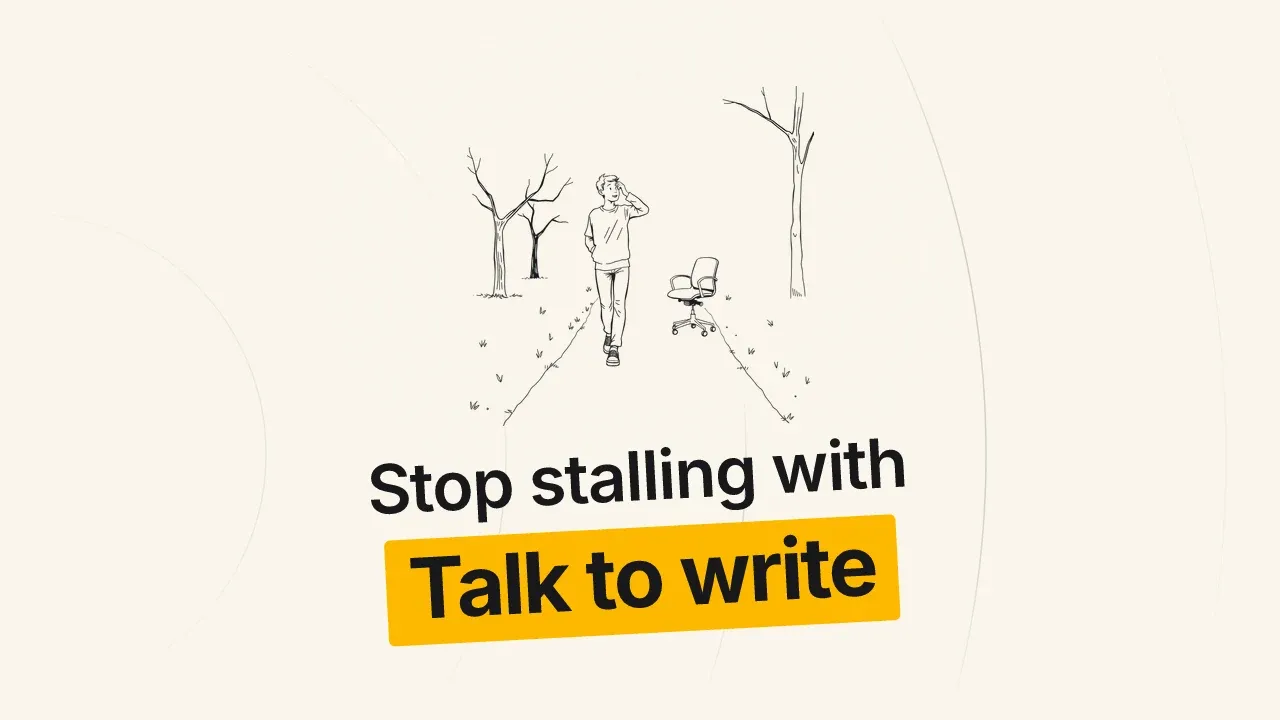
You open your laptop, stare at the blank page, and tell yourself “I’ll just watch some YouTube first.” Three months go by, and 30 topics still sit untouched in your notebook. You are not lazy. You are just afraid of the chair. Recording with a structure, from a set of guiding questions, ends your putting off right at the outline stage, then AI helps you shape it into a post you can publish.
You do not need to work out where to start. You sit down, read a question and answer it. Once you start talking, you do not stop until the post is done. That way I finish a post in about 2 hours instead of a whole day, and I always know ahead of time how long each post will take.
Do you procrastinate on writing because you are lazy?
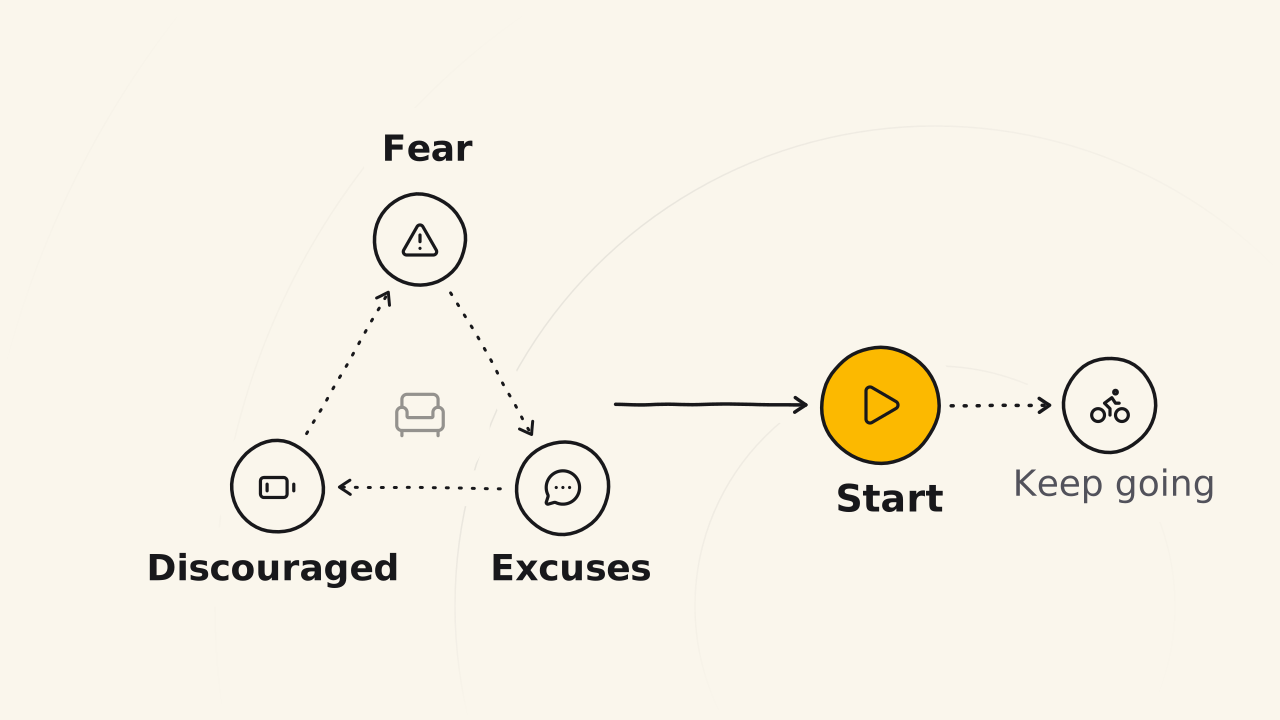
No. You do not put it off because you are lazy, but because you lose your drive right before the starting line.
The biggest block for a writer is always the chair: you sit down in front of a blank page and want to get up and leave before writing a single word. Just thinking about typing thousands of words to finish a post, your brain already feels tired of it. But the good thing about writing is that once you take one small step, the next steps get easier.
Fear and discouragement feed procrastination
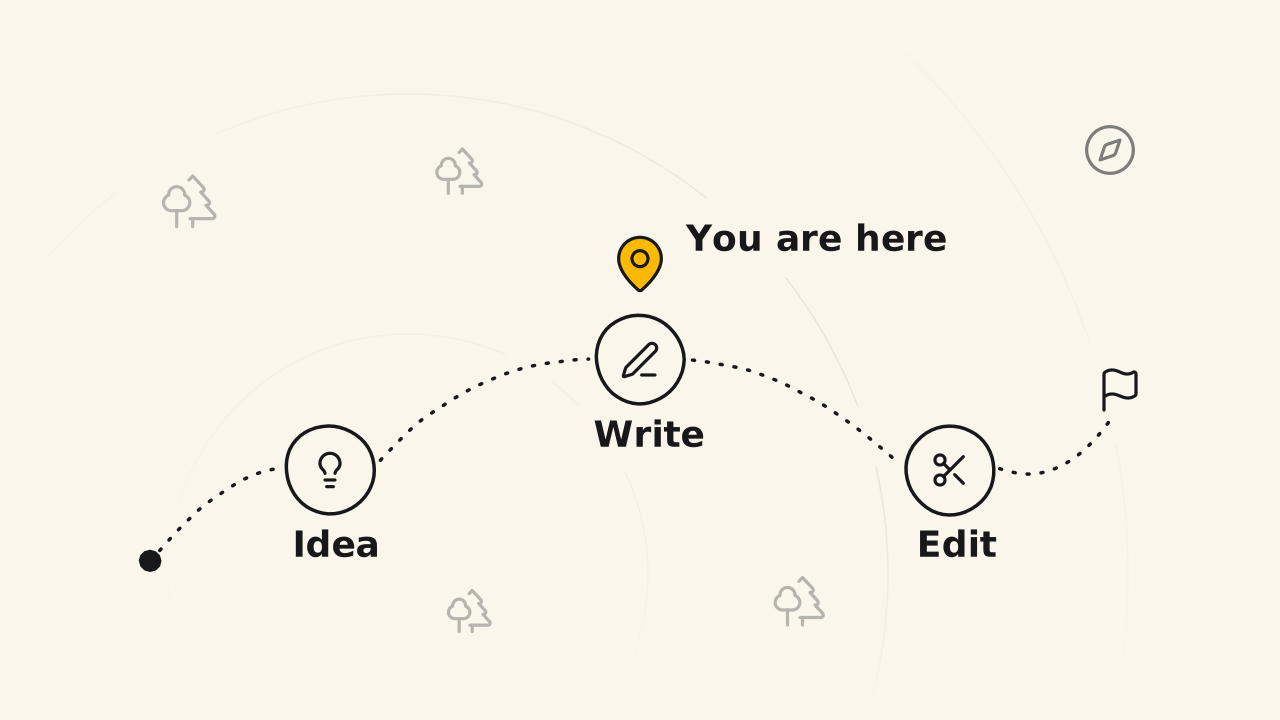
Putting it off grows with each time you get stuck:
- You open a document full of notes, but after two whole hours you still cannot settle the title: write and delete, delete and write.
- The next time you sit down, you start to fear that stuck feeling and find excuses to avoid it.
There are two common kinds of putting it off, and writers often have both:
- No ideas: you have a topic but do not know where to begin, because you have no map through the stages of publishing, like the Idea - Write - Edit process.
- Dreading the typing: your head is full of ideas, but the thought of pecking out each word wears you down.
Typing in one go wears you out by the end
If you push past dreading the typing and do it in one go on a keyboard, you hit another problem: your battery runs out.
Your hands on the keyboard can never keep up with your thinking. When you have to type a long post of thousands of words, your strength and feelings drop fast:
- The opening paragraphs are often sharp and full of heart.
- The further you go, the shorter the sentences get, with less depth and fewer ideas.
Writing has a strength: it helps you think slowly and polish. But that same work drains your energy. That is why people lean on the Pomodoro method to take breaks and recharge. If you try writing 10 questions and typing the answers, by the fourth one you start to tire, and by the tenth your answer is only a few short words.
That fear of burning out, and the feeling that your post gets worse toward the end, is what makes you hold off on starting the next one.
What is talk to write?
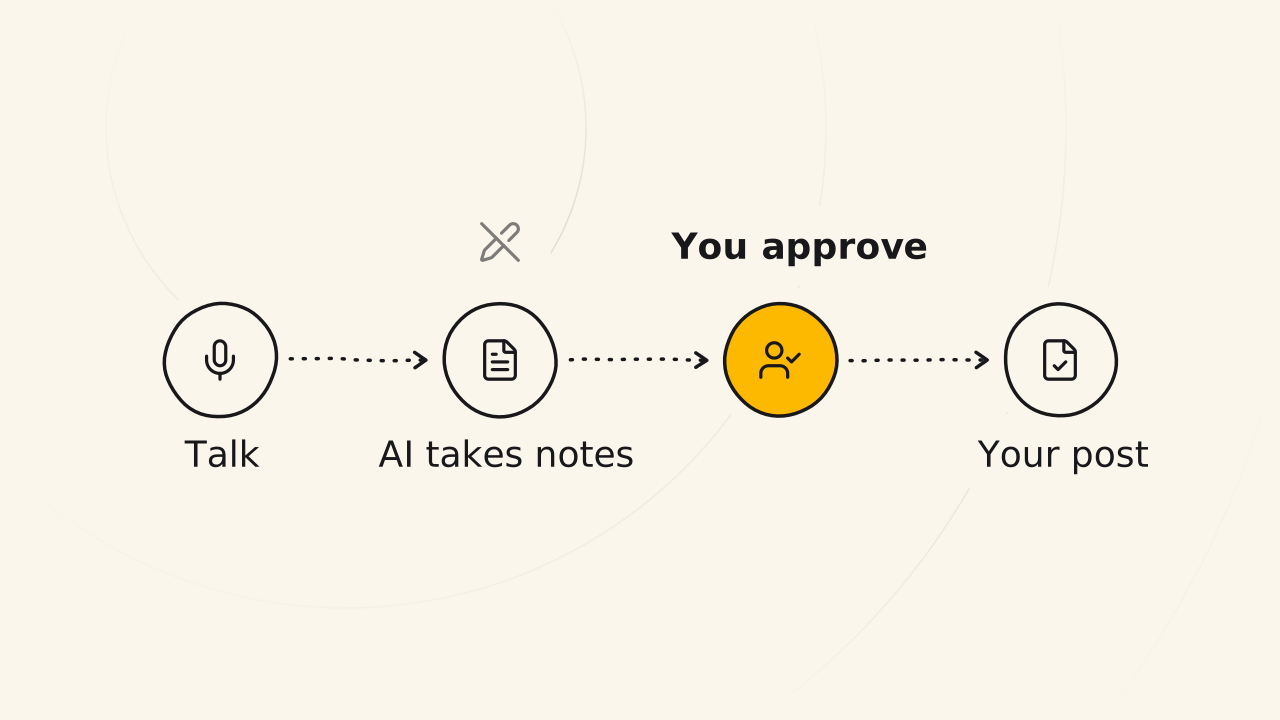
Talk to write is dictating your words to the computer instead of typing them. You turn on a recorder, answer the set of questions you wrote to a structure, and let AI turn your speech into text, sort it and fix the wording with you.
Speech to text instead of typing
Writing is really just talking on paper. Now that AI is good enough to type in place of your hands, you talk in one go and the keyboard never cuts your thoughts short.
Many people shy away from recording because they fear their voice sounds bad, or they think they are about to make a polished podcast episode. In fact, you do not need to speak well, and you certainly do not need to hear your own voice again. AI listens to the recording and turns it into text, and the only thing you need to do is read that text to check what it says. Every hurdle, like typing slowly or misspelling, is gone.
AI transcribes your words, you approve them
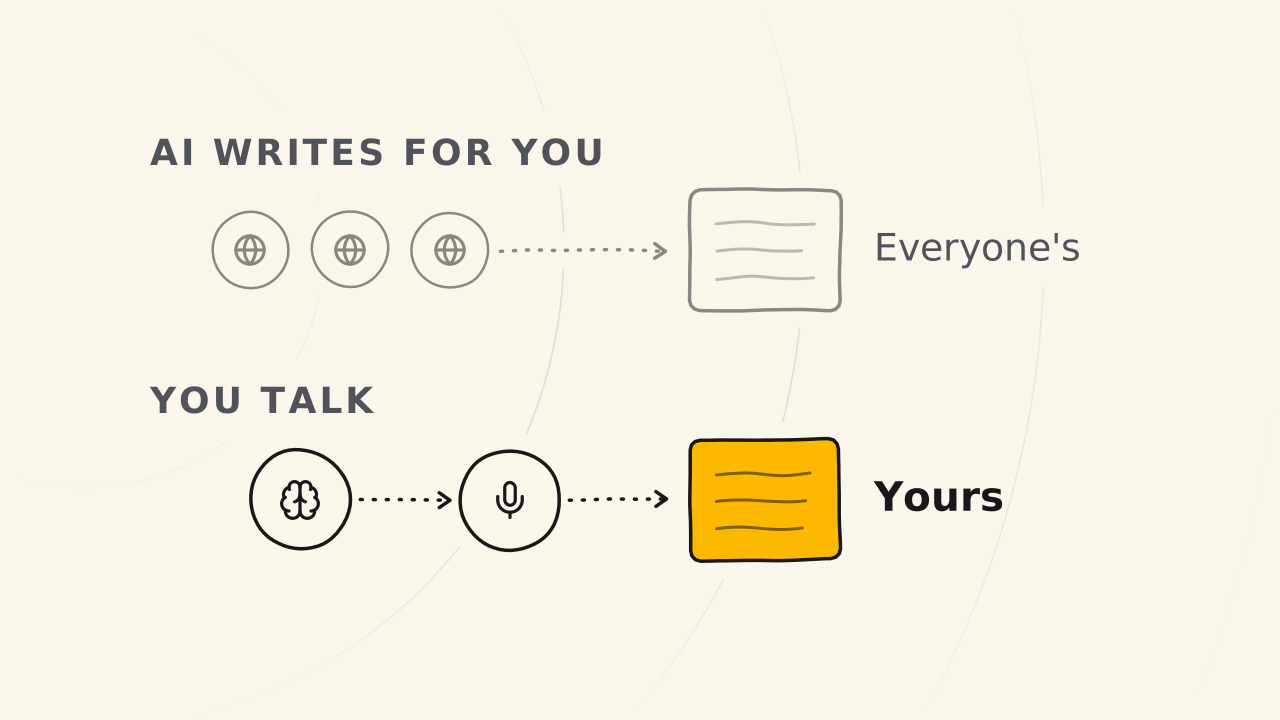
AI takes down your words, sorts them and fixes the wording, but it never thinks up ideas for you.
To be exact, AI’s work stops at the technical part:
- Turn the recording into text.
- Merge ideas that repeat, and clean out the “um” and “uh”.
- Sort the text into blocks of content that follow the script you set.
- Help reword the spots where you stumbled or were unclear, keeping your meaning.
The rest belongs to you: the one who approves and carries the final responsibility. Never leave AI to handle it alone and then press publish. You must read every paragraph to catch where AI got your meaning wrong, turn spoken style into written style, and fix what does not match.
AI can write a whole post in one minute, but it only stirs together the common knowledge already online. What comes out reads like a textbook page: full of facts but lifeless.
People who read a personal blog are not looking for that general information. They read because they want to know what is in your head: how you think, the angle you choose, and the real experiences no machine can scan for.
Why does talk to write stop procrastination?
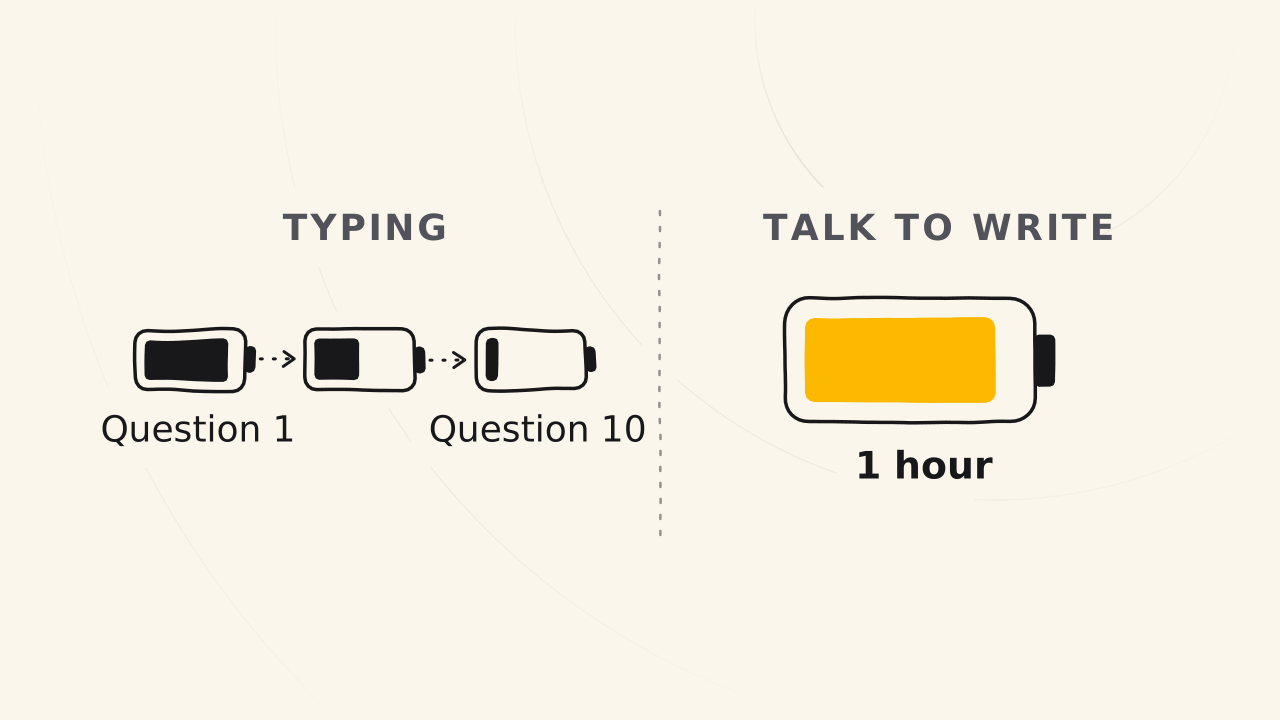
Because a set of questions written in advance makes starting easy, right from the outline stage: you sit down only to answer questions, then talk to the end of the post.
| Typing | Talk to write | |
|---|---|---|
| Speed | Slow, about 50 words a minute on average | Natural talk runs 130 to 150 words a minute: close to 3 times an average typist |
| Energy | Runs down, needs breaks to recharge | Stays almost the same for a full hour |
| Polishing | Edit while you write | Saved for the Edit step |
| Missed ideas | Often | Rarely |
A 2016 study from Stanford University found that speaking text into a phone was 3 times faster than typing it on the phone’s keyboard, with about 20% fewer errors.
Talk for an hour in one go without running out of energy
Typing makes you think hard and spend strength on your hands at the same time, so the further you go, the more tired you get. Talking needs no Pomodoro.
I talk for about an hour per post, in one go. The first sign the putting off is ending: you finish posts faster, with quality that stays even from start to finish, even if it is not always your best.
Sit down only to answer questions
I put the questions on my phone or computer screen, look at each one, and talk. Tell your own stories as you answer: when AI sorts the text, each story lands in the right part of the post.
No mouse, no keyboard, no blank page to stare at, and less to pull you away. The second sign: you no longer fear the chair, and you even feel eager each time you sit down at the computer.
No polishing, extra to cut freely
When you talk, there is no time to polish each sentence, so you do not fall into writing and editing at once. In Idea - Write - Edit, recording is the Write step, and editing is saved for the Edit step.
The third sign shows up from your very first post, in two places:
- No missed ideas: when you write, you miss ideas however much you polish and focus. When you talk, the post is more complete.
- More words: from about 1,500 words to 2,500 words and up.
I always record more than I need: I record 10,000 words and publish about 3,500. When you write, it always feels like too little, so you hate to lose any word you cut. A recording gives you extra, so you can cut freely, and cutting is what makes a post neat and keeps it on point.
What are the downsides of talk to write?
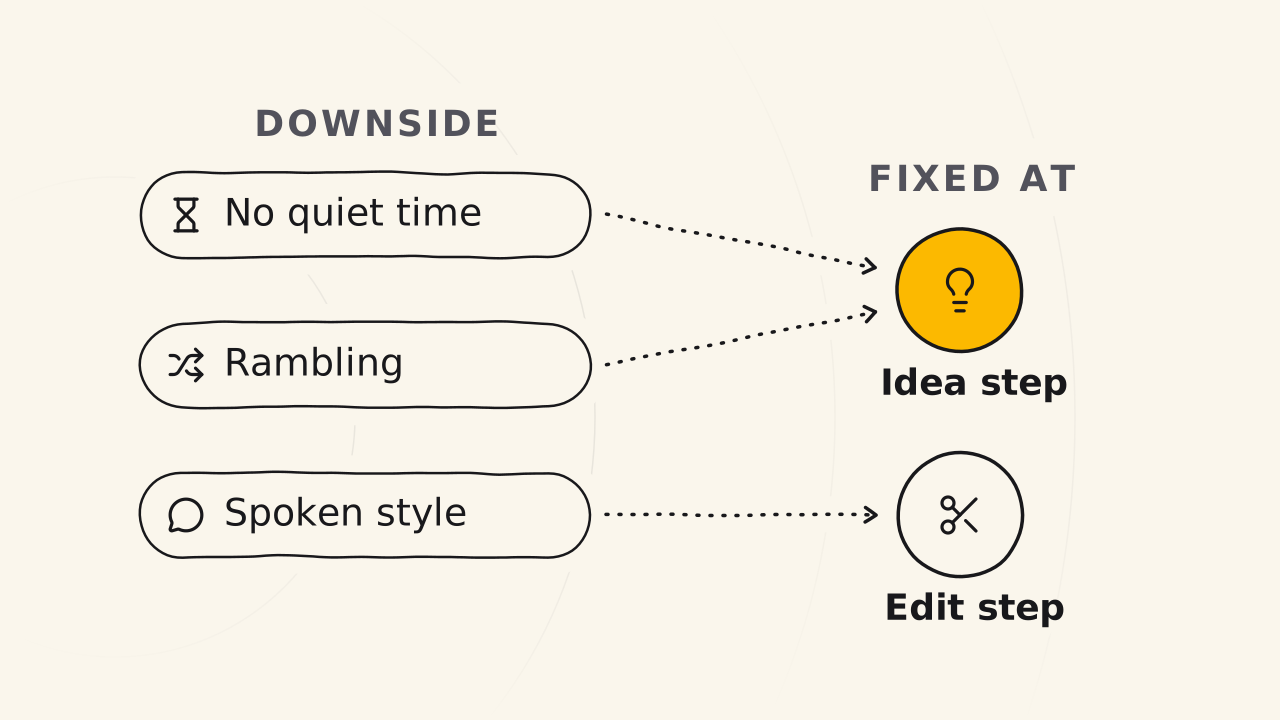
Talk to write has three downsides: you lose quiet time to think deeply, spoken style creeps in, and you ramble easily when there is no structure. You can make up for all three, if you handle each one at the right step of the Idea - Write - Edit process.
1. You lose quiet time, and get it back before and after you talk
What you lose when you talk is the quiet time to think deeply. Writing makes you stop and weigh each word so it is exact. Talking needs speed and quick reactions, so sometimes the words come out before you have thought them through.
To keep the depth of your post, move that quiet time to two moments:
- Before you talk (the Idea step): research the topic well and get your guiding questions ready.
- After you talk (when you lock the outline): read the text back like a tough listener: is this idea deep enough, is it shallow, which experience should you add? Only once the outline is locked and sharp do you move on to the next stage.
2. Spoken style creeps in, so tone it down in the Edit step
When you talk naturally, spoken style pours into the post. The good side is that it feels close, like chatting with your reader face to face, which suits a personal blog or a personal brand. But if you overdo it, the whole post turns sloppy and loses its edge.
My rule is to turn about 70% into written style and keep 30% spoken style. This happens entirely in the Edit step:
- When you record, just talk naturally, with no polishing.
- Once AI has turned it into text, you sit down to polish the wording, cut extra words, and type the opening and the ending yourself so they grab attention.
3. You ramble easily, so stop it with a set of guiding questions
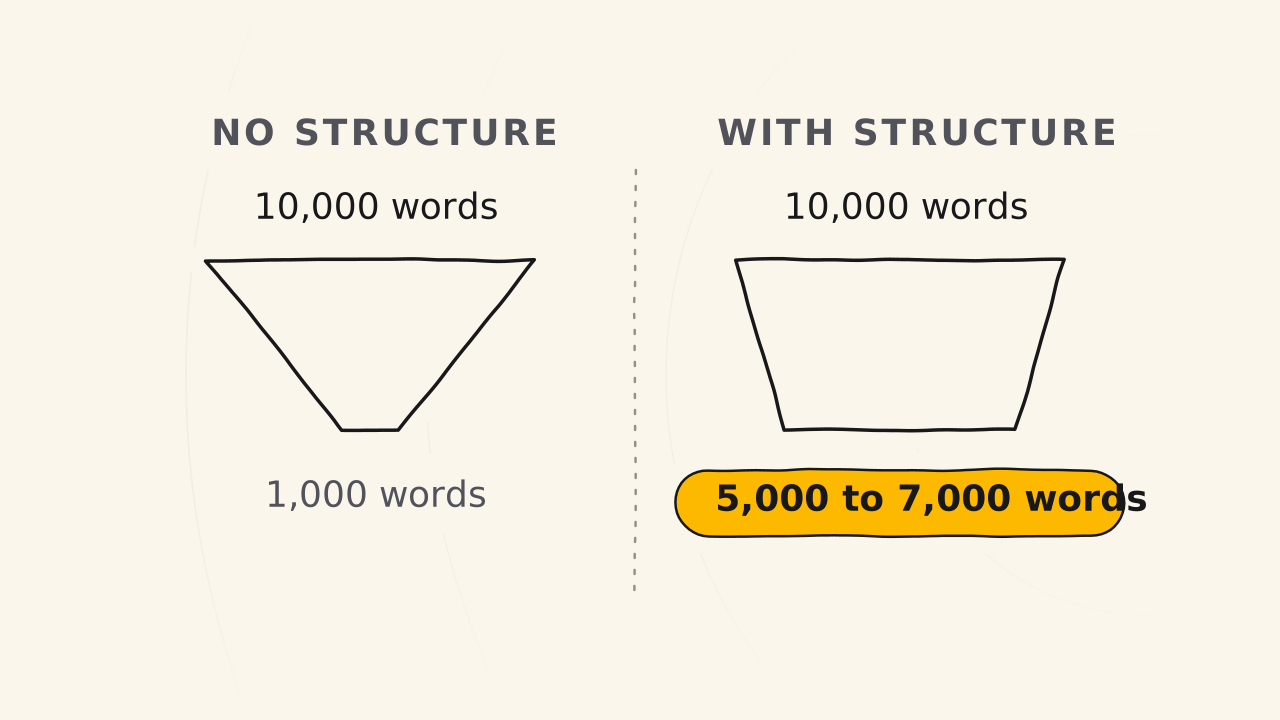
A mistake beginners often make is to turn on the recorder and talk freely, saying whatever comes to mind. The result: you say 10,000 words, but most of it is fluff, and once you trim it, only 1,000 words are left. You lose time, burn AI credits, and the post still comes out watered down.
To avoid rambling, get three things ready before you open your mouth:
- Questions that stick to the goal: write your questions for the right post type in the Know - Trust - Love funnel, so you finish each point as you go. When you stay on point, 10,000 recorded words keep 5,000, sometimes 7,000.
- Handle getting stuck for words: keep a notebook nearby. Where you do not understand something deeply yet, say it briefly or jot it in the notebook to learn more and fill your own blind spot, instead of talking at random and watering the post down.
- Pick a time when your mind is clear: record only when you feel fresh, like right after a morning workout, or while walking and talking into a microphone. Avoid recording when you are tired, angry or sleepy, because your thinking and the quality of what you say drop a lot.
How much time does talk to write save?
An in-depth post written the usual way can eat up your whole workday, but with “talk to write”, you need only about 2 hours to finish it.
1. Know ahead how long each post takes
The biggest difference between typing the old way and talk to write is that you can predict your time.
When you type the old way, you do not know when the post will be done. Some days you spend over an hour thinking, write for two more hours, then fix this and that for another two. Some days ideas pour out so fast that you keep typing all afternoon. Your time stretches with no limit and eats into the time set for other work.
With talk to write, you put a clear frame around your time:
- 25% (about 30 minutes): write the script and get your guiding questions ready (the Idea step).
- 50% (about 1 hour): turn on the recorder and talk in one go to the end of the post (the Write step).
- 25% (about 30 minutes): read it back, polish it and approve it with AI (the Edit step).
Once each post fits in about 2 hours, you are in charge of your publishing schedule:
- With an 8-hour workday, you know for sure you can finish 3 posts.
- With 30 topics in your notebook, you know that one post a day, following the Know - Trust - Love funnel, clears them all in a month, and nothing piles up.
Two hours a post is fast enough to publish week after week, and each post still carries your own experience.
2. Learn while you publish, free your hands for business
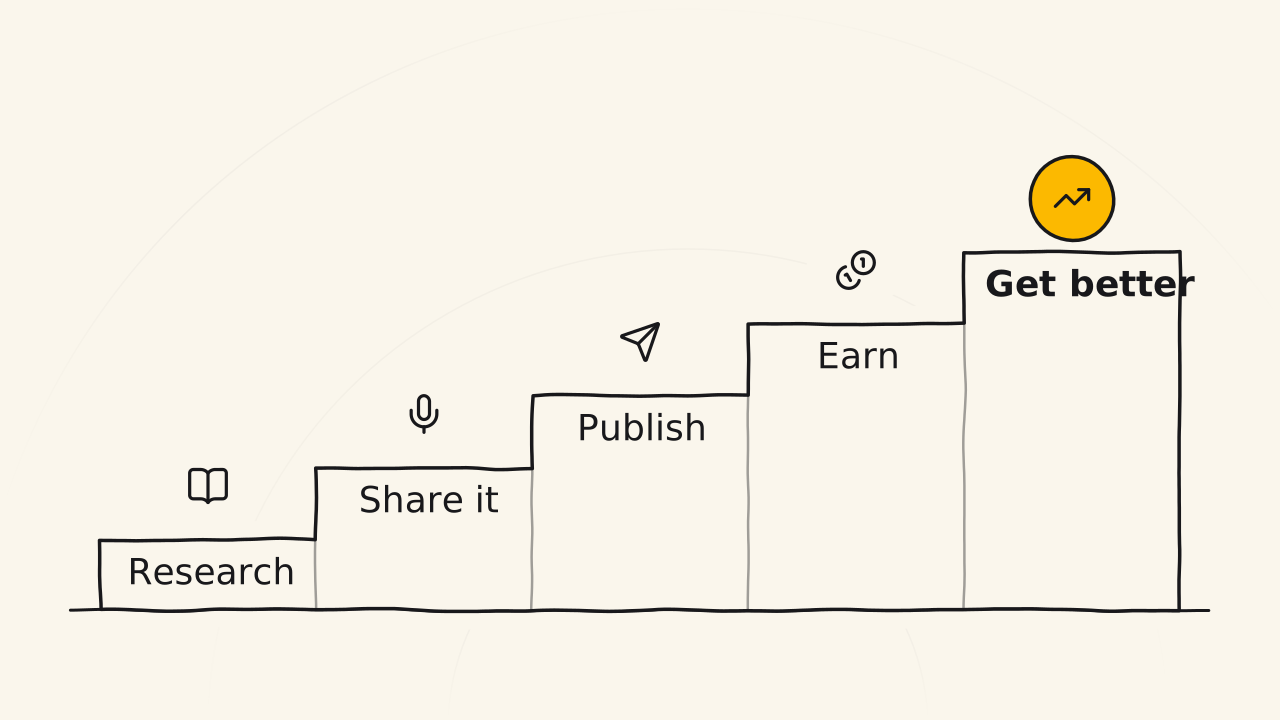
The two hours for each post also mean learning twice:
- Learning once: when you research and prepare your guiding questions.
- Learning twice: when you talk and explain what you know through your own experience.
Saying it out loud also helps you remember: a 2012 study from the University of Waterloo found that reading aloud helps memory more than reading silently, and more than writing by hand.
More important, each post takes 2 hours instead of a whole day, so most of your workday is left for the core of your business:
- Researching the market deeply and finding what sets you apart from competitors.
- Reworking your funnel so more readers become buyers.
- Calmly preparing material for your next posts, instead of always being pushed by deadlines until you burn out.
Sit down and start talking
“Talk to write” is not a magic wand that wipes out every reason you put things off, but it clears away the biggest wall: the fear of sitting down in the chair.
Instead of letting 30 topics keep sitting in your notebook, pull your chair up to the desk, open your script of questions and turn on the recorder. You do not need to write a masterpiece today. You only need to start talking.
When you are ready, read on with how to turn a recording into a fully published post to make your own first post yourself.