
Why is a long sales page a deadly trap in the age of AI?
A long sales page only pushes readers to turn on the summary feature, where every story built on empathy is wiped out with one click.

On this page
Does a long or a short sales page sell better? The answer right now: the longer you write, the more you push customers into the hands of AI.
One click on summarize is all it takes. The whole story of empathy and pain you worked so hard to plant gets stripped away by AI, and only a few cold bullet points are left.
But long or short is not what decides it. What decides it is this: where is the customer in their own journey?
When AI strips away feeling with one click
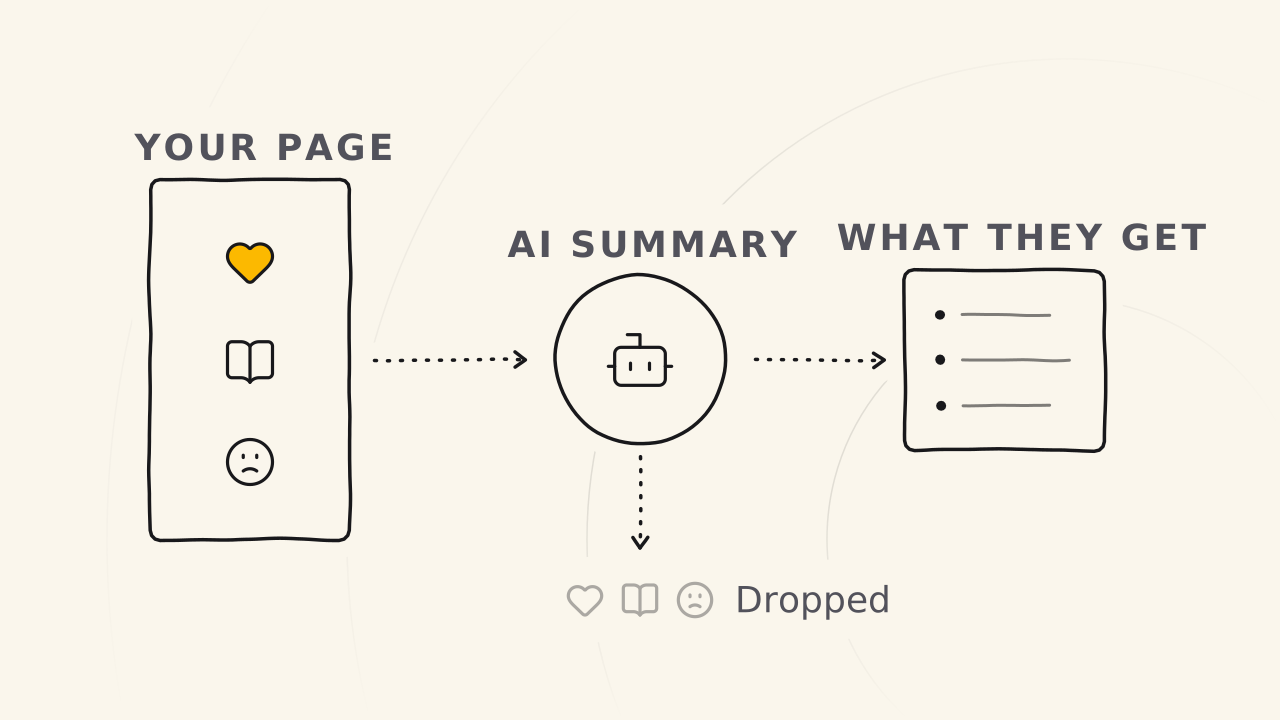
When customers see a sales page that is too long, their natural reflex today is to ask AI to read it for them. And that is when your sales page fails.
A sales page lives on feeling, but AI runs purely on logic. Customers buy because they feel understood and because of the story, but AI only pulls out the facts:
| On your sales page | After the AI filter |
|---|---|
| The story of empathy | Cut out completely |
| Digging deep into the pain | Brushed aside as “extra information” |
| Core value & feeling | Shrunk to a few lifeless feature bullets |
You worked hard to write long and persuade, but one click asking AI to summarize wipes out all that work. The customer gets back a dry summary, and their reason to “buy now” at that moment is gone too.
On the other hand, a short, focused page takes away the customer’s reason to use AI. They skim it and understand right away what they get, with no tool in the middle.
Why people often write sales pages that are too long
People who write long pages usually don’t mean to. They fall into it because of two common mistakes in thinking:
The illusion of a one-step sale
A very long sales page often shows an impatient mind: you want a customer to buy the moment they meet you.
Because they don’t know where the customer stands in their journey of awareness, writers tend to cram everything into one place: their own story, the brand, the ecosystem, every tiny feature, and a long list of testimonials.
It’s like meeting a stranger on the street and rushing to hold out a price list, urging: “Buy it, my product is really good. If you need it, I’ll turn on the demo for you right now!”
The stranger gets “bombed” with information before they even know who you are. Their first reflex is to hit the exit button.
Pushing the summary job onto the customer
Writing long is really a sign of being too lazy to boil things down.
Instead of taking the trouble to trim and pick out the one benefit that is worth the most, the writer dumps out every feature and makes readers swim through that pile of words on their own.
Choosing and boiling down the value is your job. When you don’t do it, you make the customer do it for you: read, think, and work out on their own what this product does for them. Make customers go through two hard thinking steps like that, and they will almost surely turn away.
The buying journey has no shortcuts
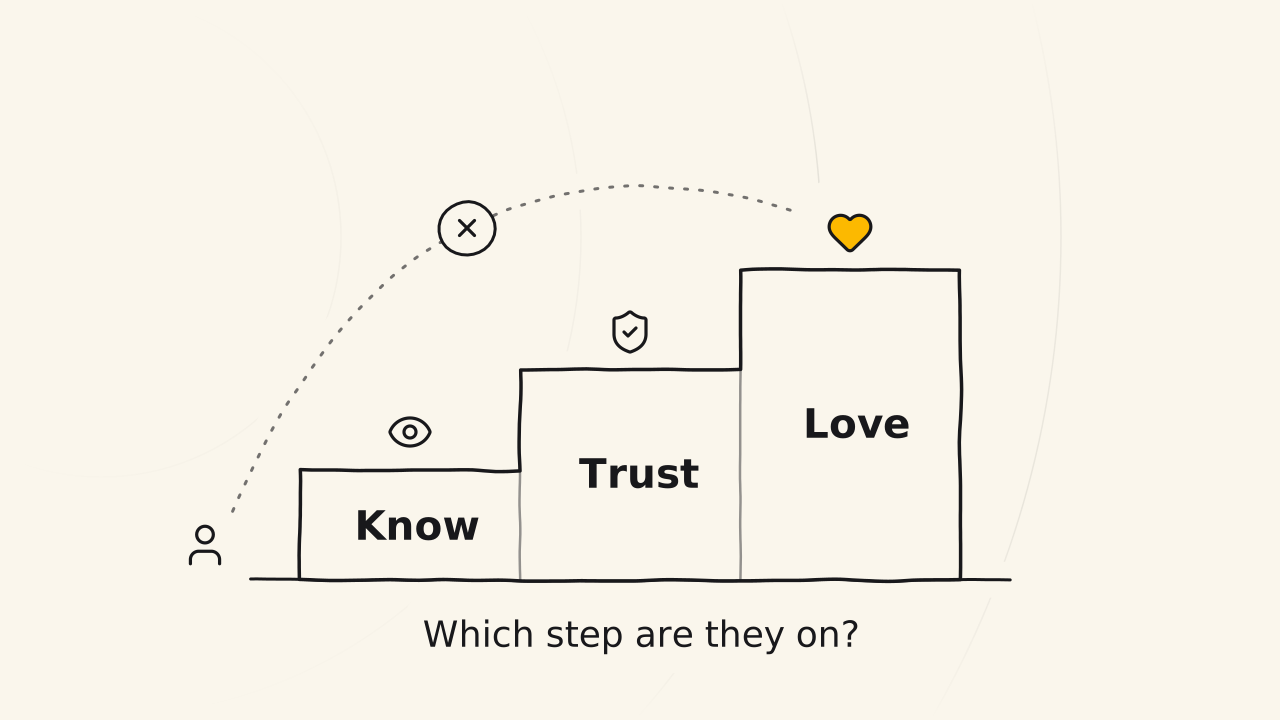
Customers rarely buy the first time they come across you. They have to go through a journey of awareness, and that journey takes time, and you can never rush through its stages.
At heart, a sale follows the rule of slow rain that soaks in deep. With the same product, showing up regularly with the same message across many contacts makes people remember you naturally. That is when customers start to Know you.
From Know, customers move to Trust in two ways:
- They see real proof from people who used the product and got results.
- They try a small product at the top of the funnel and feel for themselves: “It really works.”
Only as they dig deeper and get more value do they move from Trust to Love.
Once you understand this rule, you will see that fussing over how many words your sales page should have is pointless. The right question to ask yourself is: what touchpoints has the customer passed through before setting foot on this page?
To put it plainly: where do they stand in their journey of getting to know you?
When a short sales page wins outright
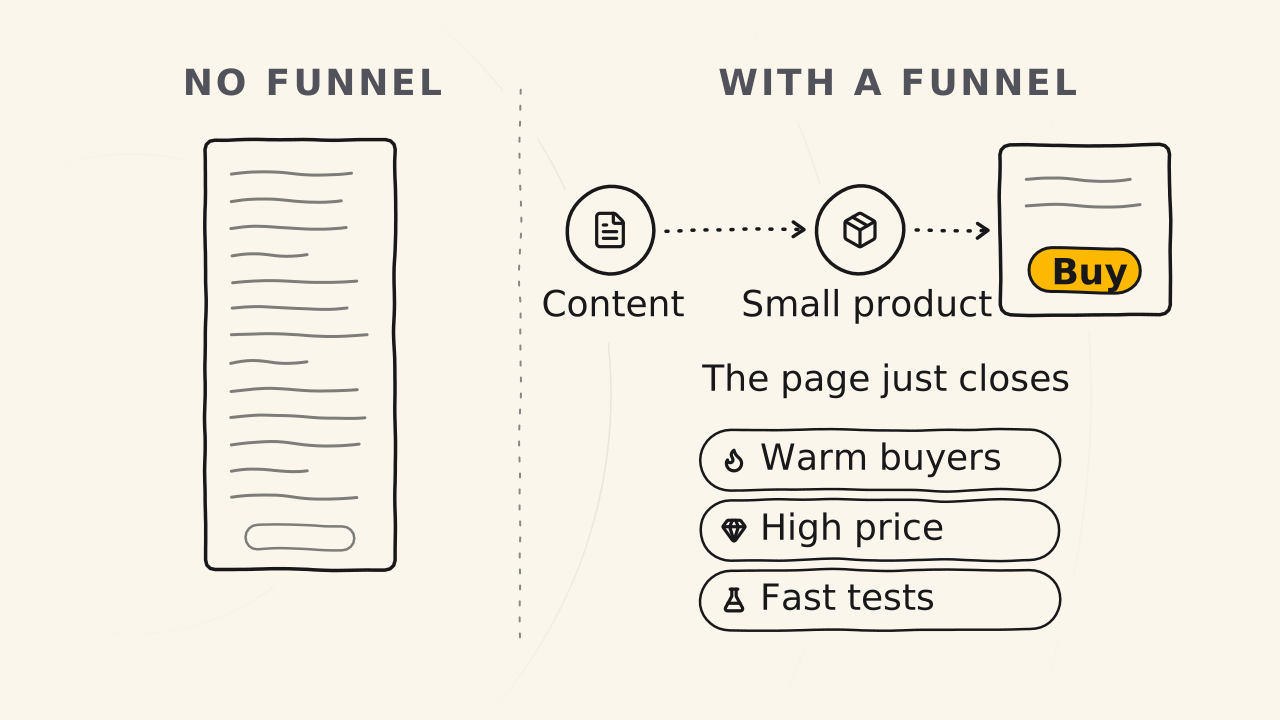
A short sales page is not writing too little. It is the result of the touchpoints before it doing their job very well. A short page works best in three cases:
1. The customer is already “hot” enough
When customers have followed you long enough and clearly understand the value you bring, they come to the landing page with only one aim: confirm what they get and pay.
At that point, they need only 3 things:
- Confirm the product is really what they need.
- Check what they get, the price, and the support policy.
- Click the pay button.
They no longer need to reread a long list of features or hear more success stories from others. At this point those things only add noise, scatter their attention, and cool down the decision to buy.
2. Selling a high-priced product with a funnel leading the way
Many people think that the higher the price, the longer the sales page must be to prove its value. But the truth is the exact opposite: the harder you try to write long to persuade, the more anxious you look, and the more you push customers away.
The people who sell high-priced products best are the ones who do a good job with a low-priced product at the top of the funnel.
They don’t put the whole weight of persuading on the final sales page. Instead, they use the low-priced product to let customers try first, along with steady streams of content that keep showing proof (the way it is built in the post on the content funnel). When trust is built firmly beforehand, the high-priced sales page only needs to be brief and focus on the change it promises.
3. Raising sales with fast A/B tests
For low-priced products, writing a very long page wastes even more effort, especially when you need to run an A/B test (comparing how well different versions of the content work).
A short page lets you make many test versions in a short time:
- Swap the headline.
- Try a new angle.
- Change the call to action.
You will quickly see which message hits the right customers, instead of spending weeks editing and tracking a long, clunky page.
Keep it lean to sell more
The length of a sales page does not depend on the number of words. It depends on how much the customer already Knows and Trusts you.
A long page both forces customers to summarize it themselves and pushes them into the cold filter of AI. A short page, on the other hand, shows up at the right moment, when customers are already “hot”: one look and they understand what they get, and they click pay right away.
To start building a truly lean page, read next: how to make a simple sales page.

