
Is a long or short sales page better in the age of AI?
Customers hand a long sales page to AI to summarize, and the feeling is lost. Long or short depends on how well they know and trust you.

On this page 1,183 words
- When an AI summary strips away feeling with one click
- Why do people often write sales pages that are too long?
- The illusion of a one-step sale
- Pushing the summary job onto the customer
- The customer journey has no shortcuts
- When a short sales page has the edge
- 1. The customer is already “hot” enough
- 2. Selling a high-priced product with a funnel leading the way
- 3. Improving conversions with A/B tests
- Keep your sales page lean to raise conversions
Does a long or a short sales page sell better? The answer right now is that the longer you write, the more you push customers into the hands of AI.
But length is only the surface. What decides it is where the customer is in their own journey.
When an AI summary strips away feeling with one click
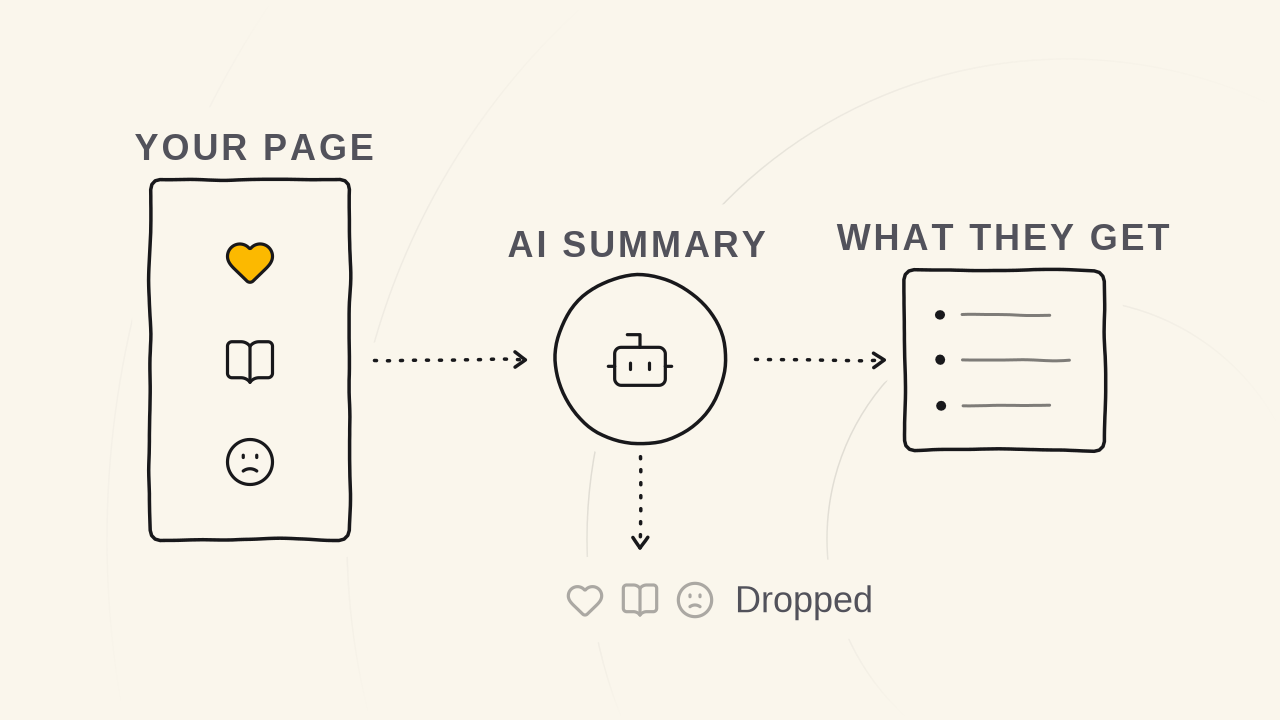
More and more people now ask AI to summarize things for them. A survey in the US at the end of 2025 found that nearly 4 in 10 people had used AI to summarize information (opens in a new tab). When customers come across a landing page that is too long, they can easily hand it to AI to read for them. And at that moment, your sales page loses the part that persuades the most.
A sales page lives on feeling. Customers buy because they feel understood and because of the story. But studies of AI summaries show that a summary often flattens the feeling (opens in a new tab) of the original and keeps mostly the facts, as the table below shows.
| On your sales page | After an AI summary |
|---|---|
| The story of empathy | Cut short, flattened |
| The part that digs into the pain | Cut back as “extra information” |
| Core value and feeling | Shrunk to a few feature bullets |
You worked hard to write long and persuade, but one click asking AI to summarize flattens most of that work. The customer gets back a dry summary, and their reason to “buy now” at that moment fades too.
On the other hand, a short, focused page leaves customers no reason to use AI. They skim it and understand right away what they get, with no tool in the middle reading it for them.
Why do people often write sales pages that are too long?
People who write long pages usually don’t mean to. They fall into it because of two common mistakes in thinking.
The illusion of a one-step sale
A very long sales page often shows an impatient mind, which means you want a customer to buy the moment they meet you.
Because they don’t know how far the customer already knows and trusts them, writers tend to cram everything into one place, from their own story, the brand and the ecosystem to every tiny feature and a long list of testimonials.
It’s like meeting a stranger on the street and rushing to hold out a price list, urging, “Buy it, my product is really good. If you need it, I’ll turn on the demo for you right now!”
The stranger gets “bombed” with information before they even know who you are. Their first reflex is often to hit the exit button.
Pushing the summary job onto the customer
Writing long is often a sign that you haven’t boiled things down.
Instead of trimming things down to pick out the one benefit worth the most, the writer dumps out every feature and leaves readers to swim through that pile of words on their own.
Choosing and boiling down the value is your job. When you don’t do it, the customer has to do it for you, which means reading, thinking, and working out on their own what this product does for them. Ask customers to do that much extra work, and many will turn away.
The customer journey has no shortcuts
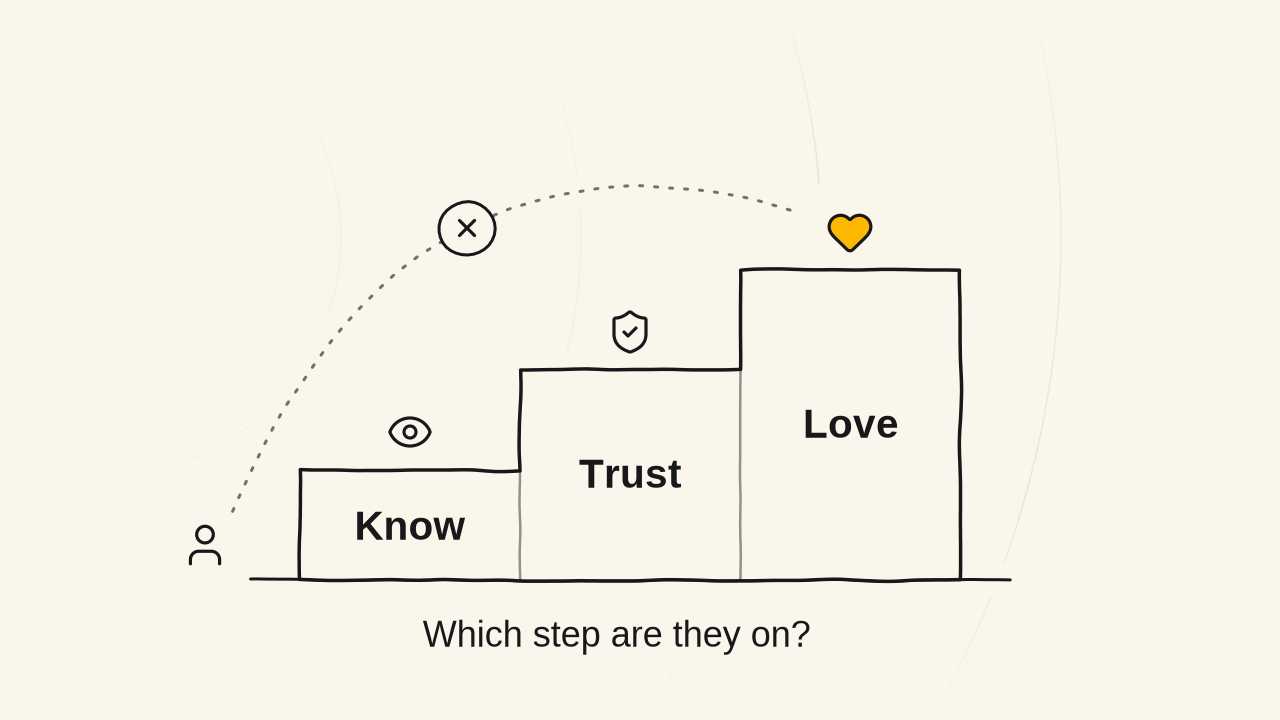
Customers rarely buy the first time they come across you. They go through a journey of awareness, the three states Know, Trust, Love, and that journey takes time.
When you show up regularly with the same message across many contacts, customers come to remember you on their own. Slow rain soaks in deep, and that is when customers start to Know you.
From Know, customers move to Trust in two ways:
- They see real proof from people who used the product and got results.
- They try a small product at the top of the funnel and feel for themselves: “It really works.”
Only as they dig deeper and get more value do they move from Trust to Love.
Once you understand this, you will see that counting the words on a sales page doesn’t help much. The right question is which touchpoints the customer has passed through before reaching this page.
When a short sales page has the edge
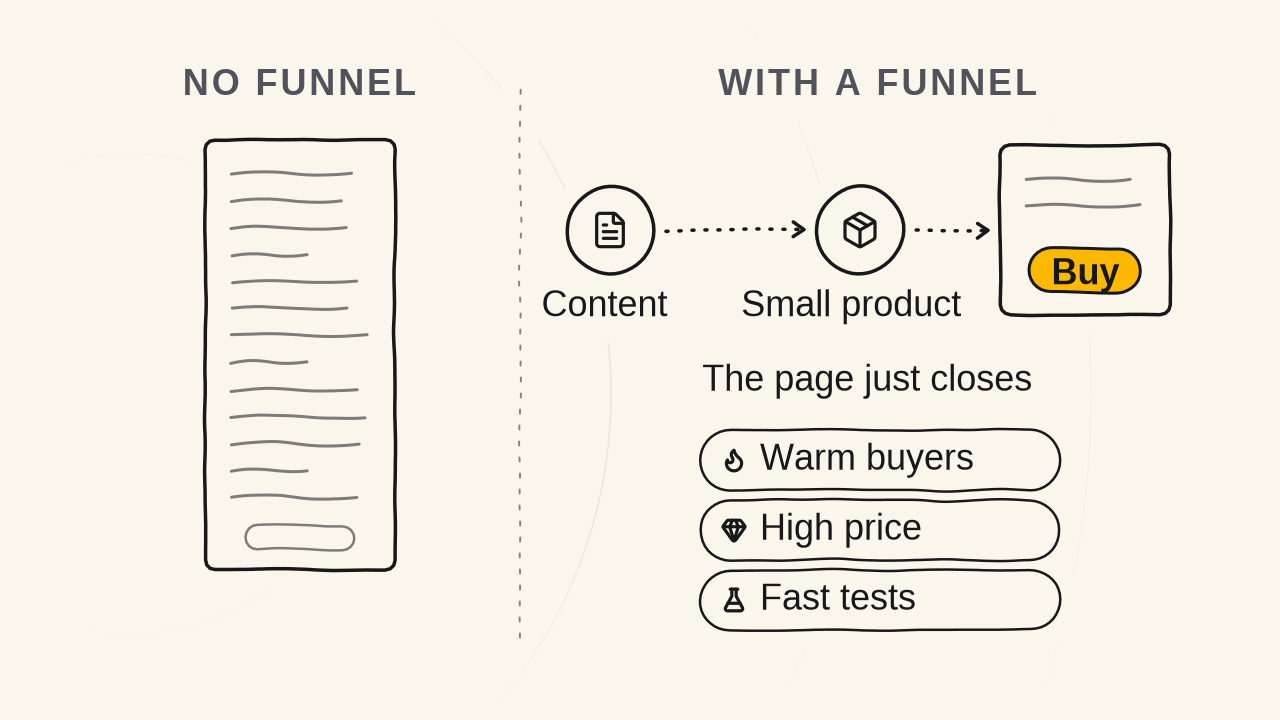
A short sales page is not writing too little. It is the result of the touchpoints before it doing their job well. A short page works best in three cases.
1. The customer is already “hot” enough
When customers have followed you long enough and clearly understand the value you bring, usually after reading the whole Love post, they come to the sales page with one aim, which is to confirm what they get and pay.
At that point, they need only 3 things:
- Confirm the product is really what they need.
- Check what they get, the price, and the support policy.
- Click the pay button.
They no longer need to reread a long list of features or hear more success stories from others. At this point those things only add noise, scatter their attention, and cool down the decision to buy.
2. Selling a high-priced product with a funnel leading the way
Many people think that the higher the price, the longer the sales page must be. That is half true. According to a MarketingExperiments test (opens in a new tab), the higher the price and the more complex the product, the more information customers need before they buy. But that information doesn’t all have to be packed into the sales page, because the funnel can carry it beforehand.
One way that works well is not to put the whole weight of persuading on the final sales page. You use a low-priced product so customers can try first, along with steady posts that show them proof (the way it is built in the post on the content funnel).
When trust is already there, the high-priced sales page only needs to be brief and say clearly how the customer will change.
3. Improving conversions with A/B tests
When you need an A/B test, which means comparing how well different versions of the content work, a short page lets you make many test versions in a short time:
- Swap the headline.
- Try a new angle.
- Change the call to action.
You will quickly see which message hits the right customers, instead of spending weeks editing and tracking a long, clunky page.
For low-priced products, writing a very long page wastes even more effort.
Keep your sales page lean to raise conversions
Whether a sales page should be long or short does not depend on the number of words, but on how much the customer already Knows and Trusts you.
A long page both forces customers to summarize it themselves and pushes them into the cold filter of AI. A short page, on the other hand, shows up at the right moment, when customers are already “hot”. One look and they understand what they get, and they click pay right away.
To start building a lean page, you can read how to make a simple sales page next.