
Each question below about the content system has a short answer, sorted into the three parts of the system: the content funnel, the Idea - Write - Edit process and the Truth vault. The overview page explains the three parts of the system, and the glossary explains the system’s own terms.
The Know - Trust - Love content funnel
With Idea - Write - Edit, how many posts should I write a month?
Idea - Write - Edit does not set a number. The number of posts follows the plan of your content funnel. The process only helps you measure your hours and work out the rest yourself: one post a day is 30 posts a month, three posts a day is 90, and a fourth post in a day is overtime.
Will following Idea - Write - Edit surely bring sales?
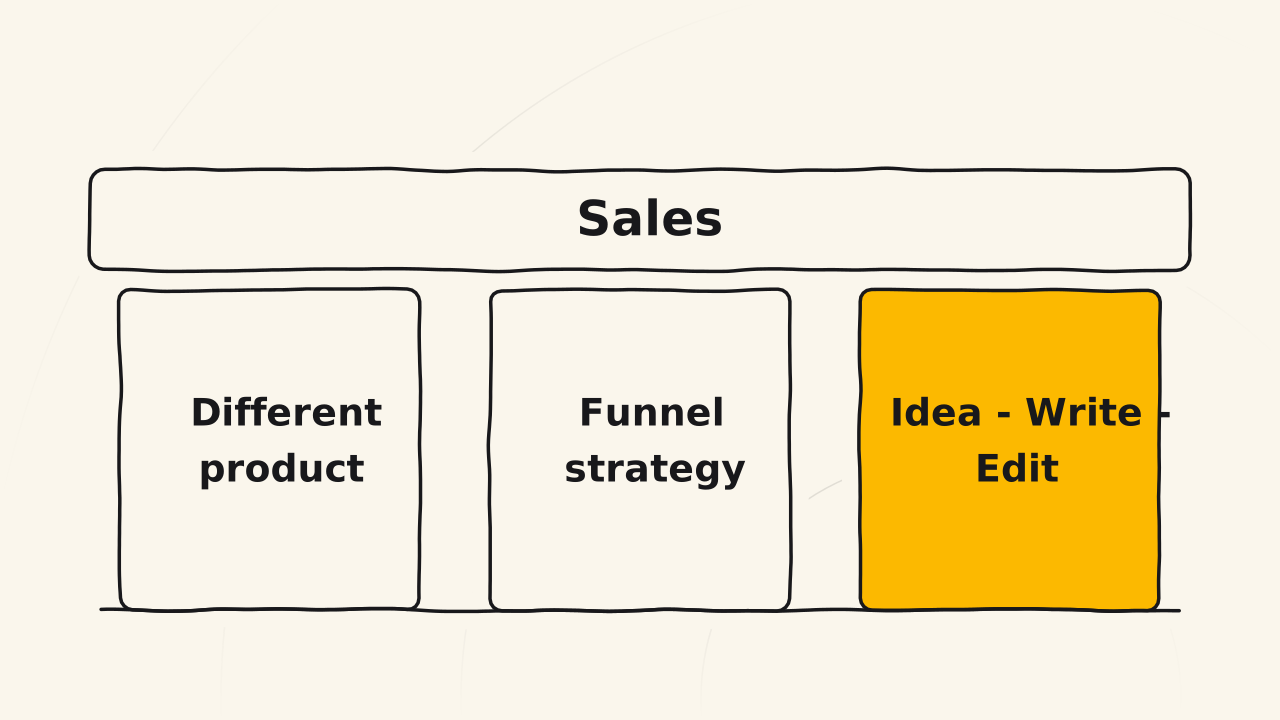
Not for sure. The process only helps you carry out your content plan. Sales come from a product that stands out and from the strategy of the funnel. If the strategy is wrong, writing better than others still may not sell.
Is writing more often enough to make sales?
Not necessarily. AI can write anywhere from a hundred to twenty thousand posts a day, so writing a lot is no longer an edge. Writing a lot without a funnel and without a way to carry it out only adds noise and chaos. With a funnel and a process, you write less and focus on quality, yet still sell more.
How do I know my posts are helping sales?
You measure it with conversion, using your site’s tracking and analytics tools, such as Google Analytics or Google Search Console. Each type of post in the funnel shows a different number:
| Type of post | The number that shows the post is doing its job |
|---|---|
| Know post | High search impressions and clicks |
| Trust post | Long reading time |
| Love post | High rate of clicks through to the product |
If readers read many posts but have not bought yet, they may simply not be ready. Review the funnel before you decide the posts do not sell.
If AI search answers for people, do I still need posts?
Yes. Google’s AI mode and ChatGPT answer in place of the searcher, but an answer has to come from a source, and Google always cites the source site. When ChatGPT does not know, it searches the internet, relying partly on Google and Bing. AI cites real people, not AI.
When you cover a topic fully with original content, a person who digs four or five questions deep still meets you in the citations, then clicks to see who you are.
The Idea - Write - Edit process
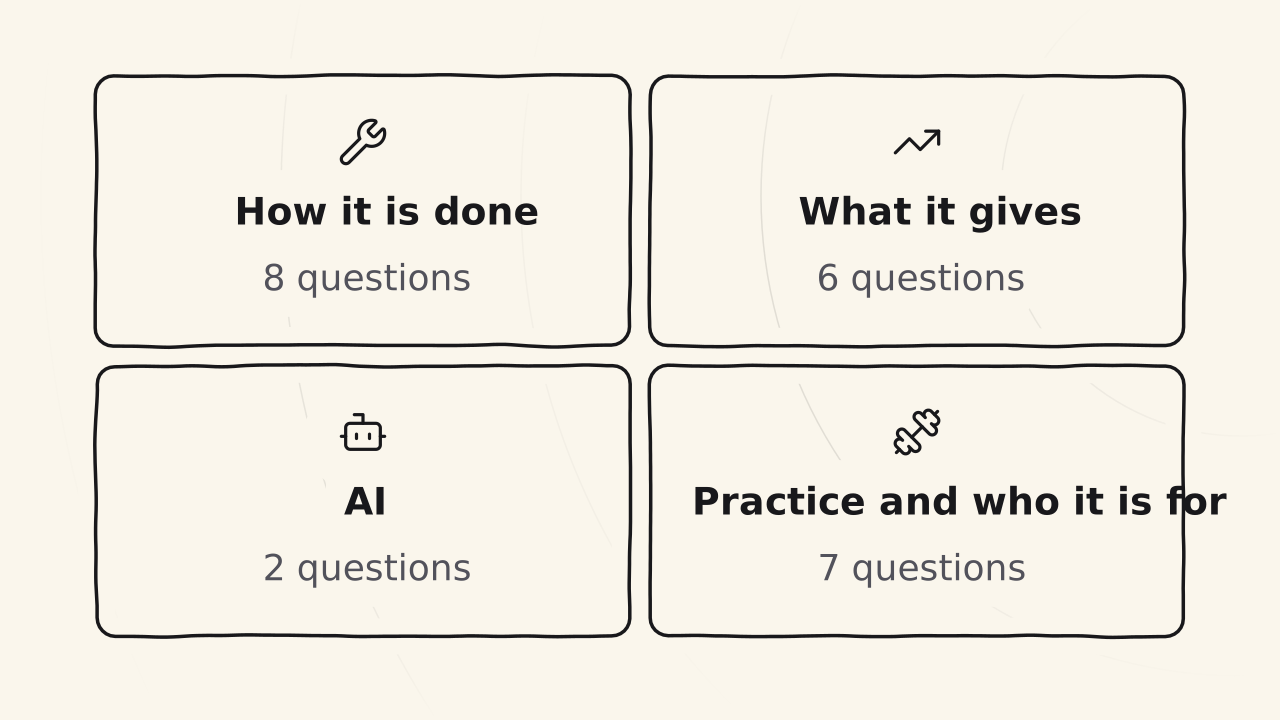
Questions about the Idea - Write - Edit process are sorted into four groups: how to do it, the results, AI, and practice. The process has three steps:
- Lock the outline
- Write in one go
- Only cut
The process overview explains all three steps.
How Idea - Write - Edit is done
Do I have to record to use Idea - Write - Edit?
No. Recording is just one fast way, mostly when you type slowly, because AI turns speech into text very easily.
- If you type fast, just type.
- If your eyes get tired from long hours at a screen, write on paper and take a photo to turn it into text.
- If you are often out, record on your phone.
You can mix all three ways.
Does recording for Idea - Write - Edit need the internet?
No. Recording is when you dig out what you know yourself, so turn off the internet and calls to focus. Only the recording app needs the internet once you finish, to send the file off to become text. The steps are in Turn a voice recording into text for a post.
How is talking to write different from typing?
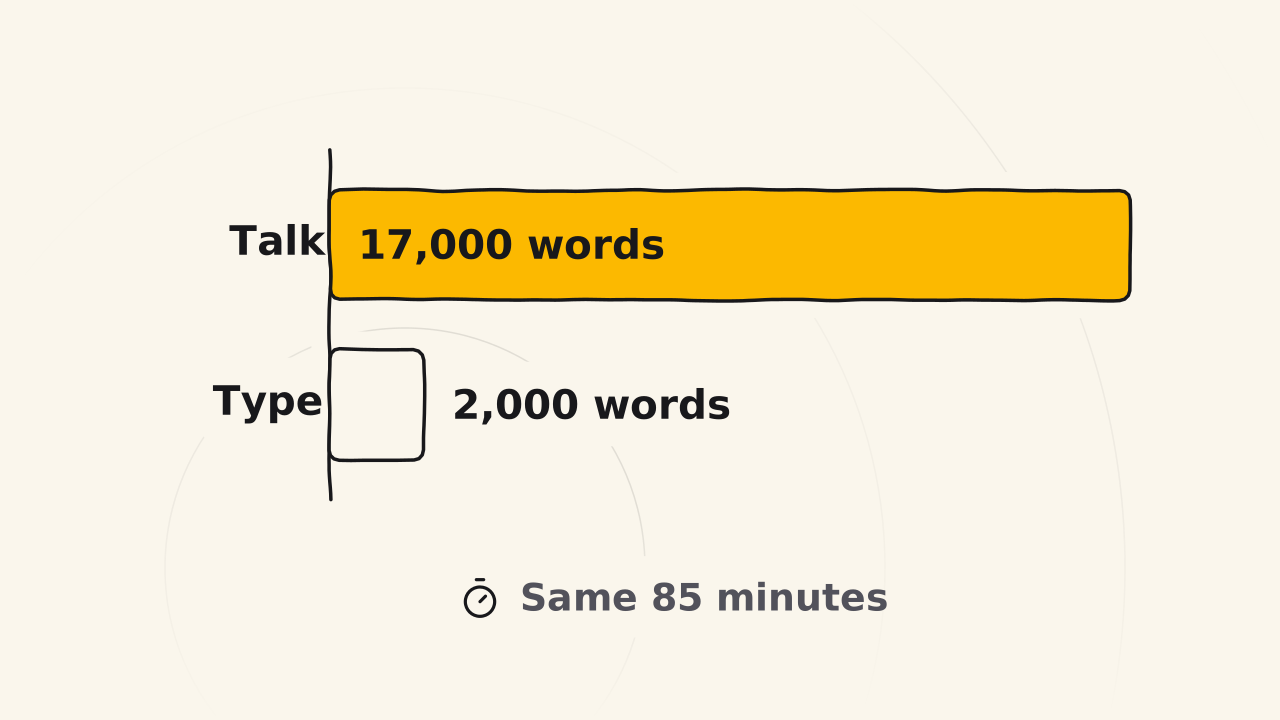
Talking leaves no ideas out, while typing leaves some out even when you polish every word. Talking is many times faster than typing: Cuong talked for 85 minutes and got 17,000 words, while typing for the same time gives about 2,000 words. The post is also longer: Cuong saw posts grow from 1,500 words to 2,500 words.
Typing misspells words, but speaking says them right, and AI fixes the rest. What you lose is the quiet time to think deeply, and you make it up in the step of locking the outline.
Does AI change my draft wildly?
AI edits from your own transcript, so it does not dare to change things wildly, even though every AI makes things up at times. Its job is to order, split and clarify, and it copies no one’s voice unless you tell it to. You approve last: if you see a mistake and leave it, that is your fault, not the tool’s.
Does each Idea - Write - Edit post need many versions?
No. Going in the right order, you usually do each post once. A later version, if any, only updates what has changed. Writing content is not a sales page where you test several versions to see which one works. It needs speed, accuracy and certainty.
Does Idea - Write - Edit make every post look the same?
No. The process only sets the order of the work, not how the post looks. The shape of the outline changes with the type of post, and what goes into each idea is your own.
Without photos or videos, should I wait before publishing?
No. If a post needs screenshots or a video you do not have yet, publish it first and come back to add them later. Once a post is out, you are responsible for finishing it, while a post kept on your computer until it is complete easily turns into putting things off.
What Idea - Write - Edit gives you
What does Idea - Write - Edit give your posts?
The post is consistent, because every idea serves one message. The post feels human and one of a kind, because you create and decide the outline yourself. Both readers and algorithms find that post easy to understand.
Why do you need a publishing process like Idea - Write - Edit?
To cut down the friction of writing: less putting things off, fewer blocks that keep a post from coming out. With a frame to follow, writing is no longer hard, and you get better each time you do it again.
Why go in the order Idea, Write, Edit?
Because the outline decides the whole post, so it has to come first. Writing first and making the outline later leads to the loop: fix the ideas, write in more, change the titles, then fix the ideas again. With a good script, people still like the post even if the telling is a bit clumsy. With a choppy script, no wording can save it.
AI and Idea - Write - Edit
Why not let AI write posts so it goes faster?
Because AI writes from what is common in the world and has none of your experience. Pinned on you, what it writes is wrong, and readers want to read your thinking.
Readers spot signs of AI more and more, and in some places they even boycott AI junk. They also think less of a brand that uses it. Algorithms favor people and feeling: Google may drop the post from its index, lower the standing of the whole site, or lower the standing of single posts. The AI companies themselves still use people to write their own posts.
You still use AI, just in the right places: see What AI does in each Idea - Write - Edit step.
What if competitors use AI and publish faster?
You cannot win by racing on tools: if you have AI, so does everyone else, with the same tools and sometimes more of them. Your edge is you, and it costs nothing. With a process and with practice, your speed grows while your posts stay yours.
Can I write some posts myself and let AI write most of them?
No, you should not. You write at one speed and AI works at the speed of a button click, so in practice it turns into 90 posts written by AI and 10 written by you. Those 90 posts hurt your brand: they do not match your style, their quality is uneven, and your content turns into chaos.
A reader enjoying a post you wrote clicks to a post AI wrote, loses interest and leaves, with no conversion. Use AI for the jobs it does well, and write the posts yourself.
What if I have already published many AI posts?
Split them into two groups:
- Posts that get traffic: keep them, rewrite them with your real experience, then swap them in.
- Posts nobody searches for or reads: delete them, because they hurt your brand.
If you do not want to touch the old site yet, leave it as it is and put your effort into new posts, or build another personal brand site.
Practicing Idea - Write - Edit and who it is for
Do I need to write well to use Idea - Write - Edit?
No. The most important step is the Idea step, and it rests on your gut sense: you read the outline and feel whether it flows. People who read books, read the news or watch videos every day already have that sense.
Fancy writing, figures of speech and slang even make the post harder for readers, AI and Google to understand. The goal of a post is for customers to understand, not to praise your wording. People buy a product because it helps them, not because they look up to the writer.
How long until Idea - Write - Edit feels natural?
The process does not promise a number of weeks. At first it still feels heavy, because you are not used to it and do not have much content yet. Keep going post by post, and it gets lighter, until you work by habit and no longer need to remember each step.
After each post, look back at which step got faster. How to practice post by post is in Practice Idea - Write - Edit with every post.
Do I need feedback to practice Idea - Write - Edit?
Not strictly, but with feedback you go much faster: when you get something wrong, someone points it out right away. Once you finish your first post with the process, share it with a community such as the HXN Tribe to get feedback from many people. With feedback, you learn the process much faster than working it out alone.
Does Idea - Write - Edit work for video?
Yes. Idea - Write - Edit is a frame for every kind of content, including YouTube or TikTok videos. The skill you train is the skill of publishing, not only the skill of writing.
Who is Idea - Write - Edit for?
People who run a business on their own, with one to three products, who want to make their own content and get better at it themselves. Once you know the process, you can do it alone without hiring a writer.
Who does not need Idea - Write - Edit?
Business owners who are used to hiring people or agencies to make their content, and people who just want to buy a tool that makes hundreds of posts at one click. For them, the gain from training themselves does not matter. If what they want changes later, they can come back and try it.
What if Idea - Write - Edit does not suit me?
Try it before you decide: follow it and check what Cuong says, then come back and judge whether to keep going. If it slows you down, you do not need to follow it. If it works better, share it with others.
The Truth vault
How much of the transcript do I need to check?
Usually only the names: names of people, products and tools. Speech to text models today are about 95 to 99% right. You can still check a 17,000 word transcript when you want to, but usually you do not need to.