
After this page, you can assign any post to one stage of the Know - Trust - Love funnel: Know, Trust or Love. The fastest way is to look at what readers need from that post, then check it against the signs of each stage.
This page is for you when you have a post, an outline or just a main idea, and you do not know which stage it belongs to. If you have no funnel yet and want to build one from scratch, read Build the funnel from your product’s core first.
What you need
- The post, its outline or its main idea in front of you. Sort it in the Idea step, before you write: every type of post goes through the same Idea - Write - Edit process, and only the shape of the outline changes from type to type.
- A list of the questions customers have asked you, one per line. A question that opens with “what is” or “why” is a topic for a Know post.
- The product or sales page your chain of posts leads to, written in your brand profile.
Sort a post into the Know, Trust or Love stage
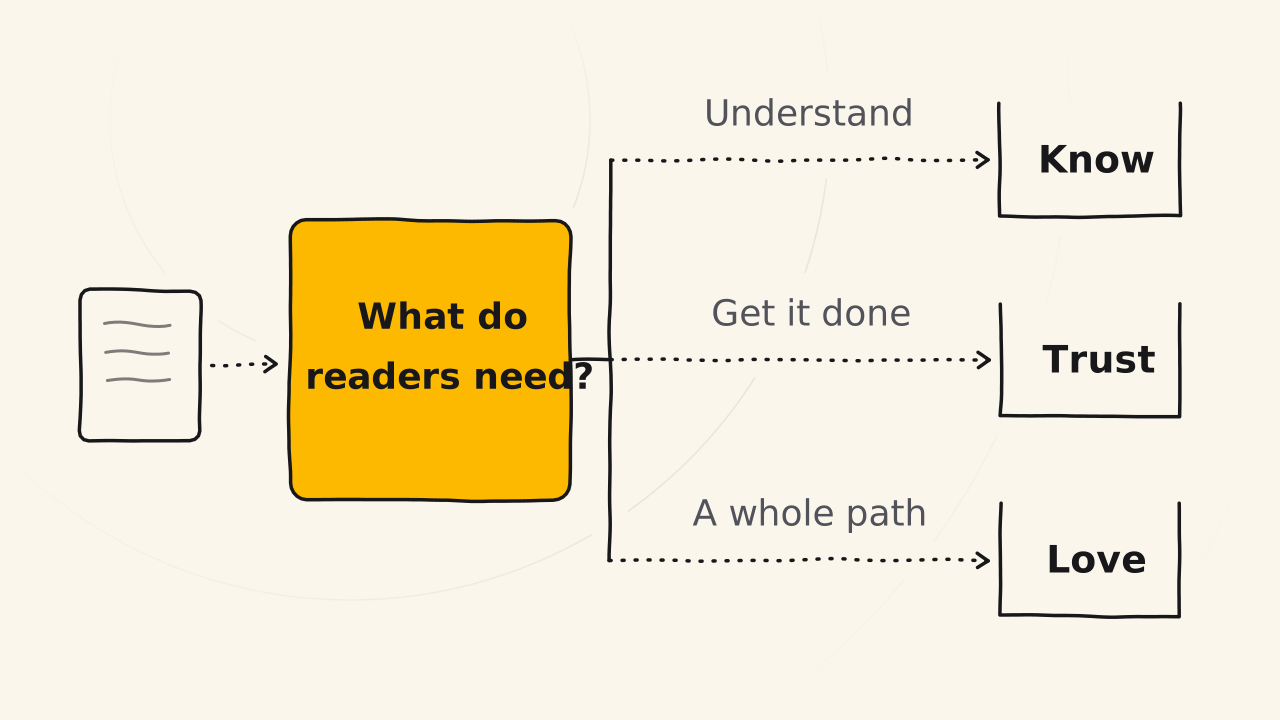
Each post belongs to exactly one stage, because readers go through three states in order: know, then trust, then love. In Cuong’s experience, that journey cannot be cut short, so each post serves one leg of it.
Find what readers need from the post
Ask which leg of the journey readers are on when they meet this post. Read the title and the main idea, then pick one of three answers: readers need to understand something (“what is this”, “why does it work this way”), need to get something done and see a result, or need a whole path out of a long-running pain. You end up with one answer, which matches one row of the table below these steps.
Check the signs of the stage
Each stage has a set of signs, and the post must carry the full set for the stage you picked. Know post: it holds your view on the customer’s problem, speaks in your own way, and readers remember one thing that sets you apart. Trust post: it states the result up front, each step is detailed enough to follow without getting stuck, and you have done the work yourself. Love post: it is long, runs from the pain to the result, and has your true story, a moment of understanding for the reader, guiding steps and a commitment about the result. You will see which signs the post has and which it lacks.
Split mixed posts and add the next link
If a post mixes two jobs, explaining and guiding, pull the “what is” and “why” parts out into a Know post of their own, so the Trust post keeps only the steps. Then link the end of each post to the next stage: Know to Trust, Trust to Love, Love to the sales page. You end up with one stage and one next stop for each post.
| Readers need | Stage | Readers feel | End of post leads to |
|---|---|---|---|
| To understand a concept or a reason | Know | “I understand one more thing.” | A Trust post |
| To get something done and see a result | Trust | “I did it.” | The Love post |
| The whole route for one pain | Love | “I can see the way now.” | The sales page |
Why each stage needs these signs is on the three concept pages: Know stage, Trust stage and Love stage.
How do you know a post is in the right funnel stage?
A post is in the right stage when all three of these are true:
- The “readers feel” line in the table is what readers really think after the post.
- The post has all the signs of that stage and none of another stage.
- The end-of-post link leads to the right next stage.
Common mistakes and how to fix them:
- A Know post that is only information. People take information questions to AI, and AI answers faster and more fully than you. Add your point of view and what sets you apart: what you have been through, what you have really done.
- A Trust post that guides readers through something you have not done yourself. The sign: you have no real result for readers to compare against. Do it for real, get the result, then write it up as a guide.
- A Trust post that is long because it is stuffed with explanations. Take the explanations out into a Know post, as in step 3.
If a post fits no stage of the funnel
The post fits no leg of the funnel
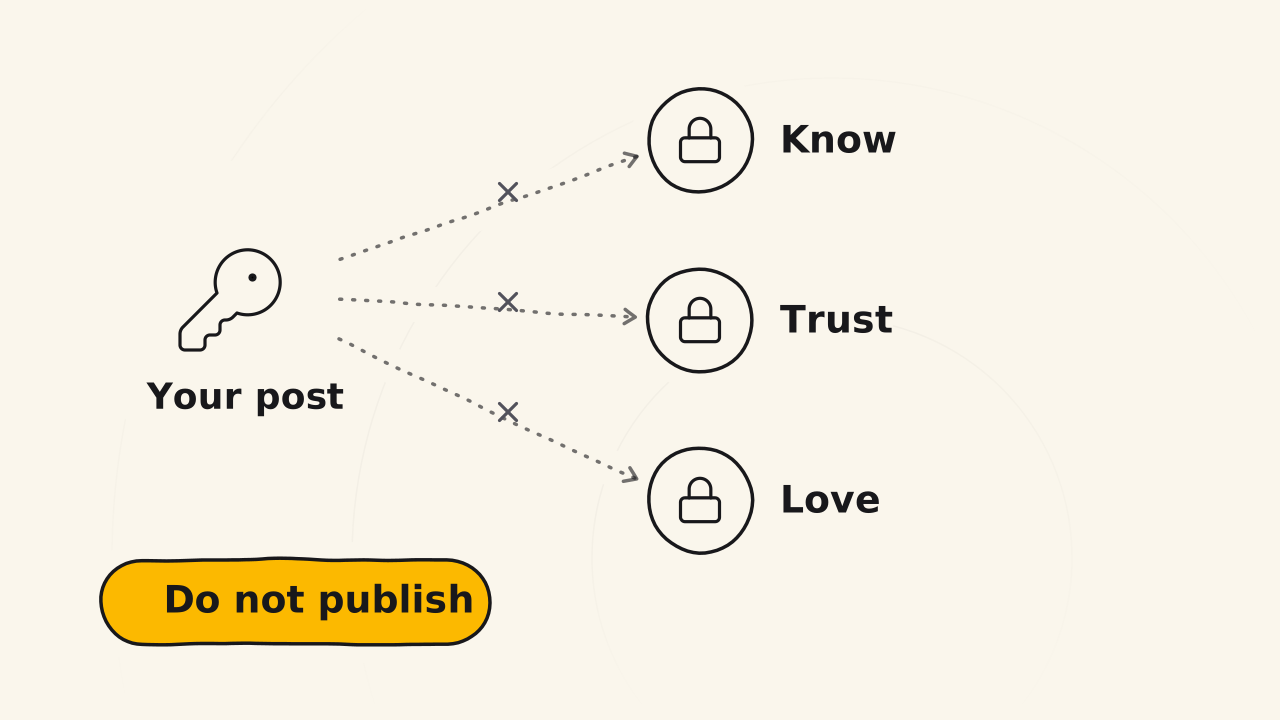
A post that answers the question of no leg and leads to no next stage has no place. Keep it as a draft instead of publishing it. This rule replaces the habit of writing on a whim or by keyword, and the full reason is in the Content funnel post.
The post looks like a second Love post
The funnel has one Love post. If your post is long and complete like a Love post, ask yourself: is this one leg of the existing Love post? If it is, rewrite it as a Trust post. How the funnel grows is in Funnel phases and links.
Readers land straight on a Trust post or the Love post
This is normal. You cannot control which stage readers enter the funnel at: through search engines or AI, they can land straight on a Trust post or the Love post. The post’s stage does not change. You only control the path, with end-of-post links and links inside the post.
Read next
Create a core message
Squeeze one idea into a one-sentence core message from three questions on your customer, their problem and your solution.
Build a three-layer sales page
Build a short sales page with all three layers, the name and core message, proof even with no buyers yet, and a note from the person who made it.
The Idea - Write - Edit process
Idea - Write - Edit is three steps to publish a post, where you lock the outline, write in one go, then only cut, each step with its own stop.