
The home page of your personal site builds your brand. A reader who lands on it needs to understand right away who you are, what your expertise is, and which product you sell or will sell. Algorithms read this page too, to confirm who you are and what the website is about.
What do you need first?
Before you build the home page, you need what you made clear at the start of the Positioning stage:
- Who you are and your expertise. This is the first thing the page declares.
- Your mission and beliefs. This is what you pursue for the long term, and it doesn’t change from month to month.
- Your core product, whether you have it or plan it.
- The people you have helped and the path you have walked.
Keep these in one place, such as a Digital brain, so you copy them onto the home page instead of thinking them up again.
How do you build it?
Say who you are and your expertise
The top of the page says who you are and what your expertise is. Customers and algorithms both need this first, because it shows which field the whole website is about.
Keep it short and clear. A first-time reader should know whose page this is after reading it.
Say your mission and beliefs
Next comes your mission, meaning what you pursue and what you truly believe. A steady mission helps customers see why you do this work, and keeps you from writing posts that drift off course.
When you have no product yet, the home page only needs to state your mission, your expertise and your beliefs, meaning what you will do and why you do it.
Introduce your product
A personal site should always have a product. If you have one, put it on the home page. If you don’t, make one for the personal site, usually a product that helps you learn and practice your own expertise.
That learning product can become a business later, when you see that people need it and then sell it to more people.
Tell your story and who you helped
The last part tells your story of whom you have helped and what path you have walked. It shows customers that you do real work, not just keep an empty profile page.
Pick stories that speak to your customers, not stories that go on about yourself. The full story about you belongs on the about page.
How do you know it is enough?
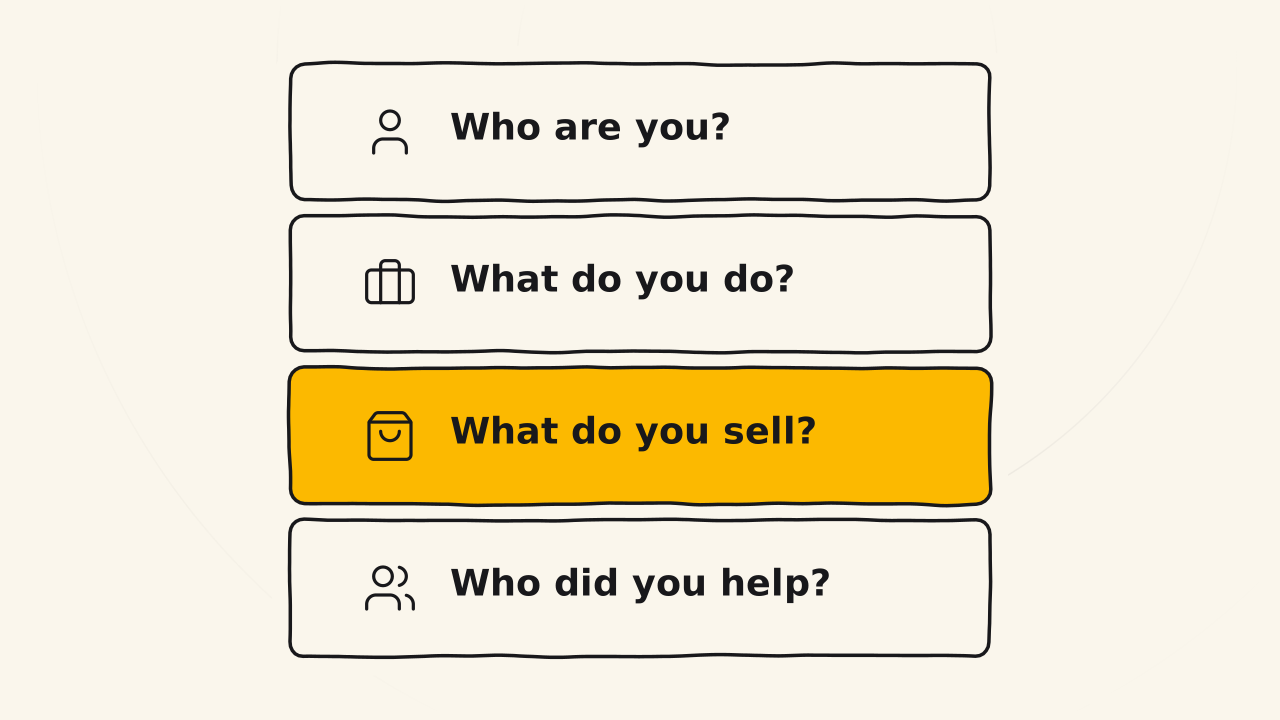
A stranger who reads the home page can answer 4 questions:
- Who are you?
- What are you doing?
- What is your expertise?
- Which product do you have, or will you have?
When all 4 are answered, the home page is enough for algorithms to understand what you do. The home page is one of the pages to finish before you turn on indexing.
A home page algorithms read
The home page is not only for customers. Once your website is indexed, algorithms read the home page to verify you, which means learning who you are, what you do, what your field is and which products you have. A home page that answers those 4 questions clearly helps algorithms file your website under the right field.
So don’t leave the home page with only a big picture and a few latest posts. The answers belong right on the page, in words, so both people and algorithms can read them.
Related pages
- Doesn’t give a ready-made frame block by block: see Home page template.
- Doesn’t teach how to write an about page: see Create an about page.
- Doesn’t teach how to put a website online: see Turn on indexing.
- Doesn’t explain the business site: see Business site.