
A ranking keyword is a long keyword from traditional search, the kind of keyword that traditional SEO aims for. This kind of keyword supports the entity keyword and brings visits to your website when someone searches. In Write to Sell, ranking keywords are mainly for Trust posts.
What is a ranking keyword?
A ranking keyword is a long phrase that people type into Google when they need to do one specific thing. Most of them look like “how to do something”, when the searcher already knows what they need to do and wants to know how.
A ranking keyword has a long-term side. A post that ranks for a long phrase can keep bringing readers to your website for a long time, as long as the content still matches what people need.
Most how-to keywords belong to this type. This is where you compete head-on with others in the market, because many people write about the same task.
Even where you compete head-on, the ranking keyword still comes after the entity keyword.
Entity comes before ranking
A ranking keyword supports the entity keyword and does not replace it. The entity keyword tells the algorithm who you are and what topic you cover. The ranking keyword brings a person who is searching for one specific task to the right post of yours in that topic.
| Entity keyword | Ranking keyword | |
|---|---|---|
| What it is | A brand name and a big topic that are verified | A long phrase from traditional search |
| What it gives | Presence and reach on AI | Ranking and visits to your website |
| Check it with | Google Trends | Google search, Google Keyword Planner |
| Main post | Know post | Trust post |
So you do not need to focus too much on the ranking of a keyword. Buying and selling today depends more on the entity keyword, so ranking is a support, not the main goal.
This supporting role also changes how you place a ranking keyword in a post.
No need to stuff keywords
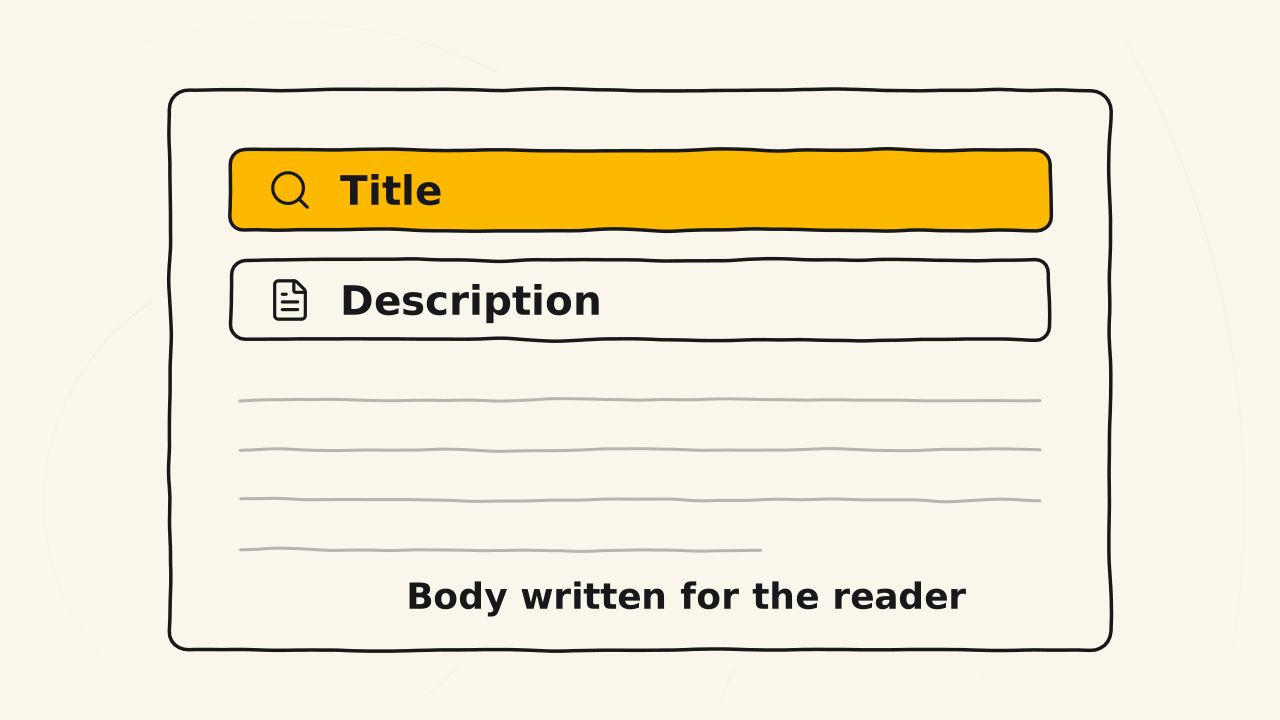
The way you use ranking keywords has changed. Stuffing a phrase many times into the body is no longer needed.
You only need to optimize the keyword in 2 places:
- The title of the post.
- The description of the post, the short text under the title in search results.
The rest of the post serves the reader the post is aimed at. When the content answers exactly what the reader needs, the post is already understood as being about that phrase. With the placement settled, the question left is which kind of post needs a ranking keyword most.
Trust posts need ranking
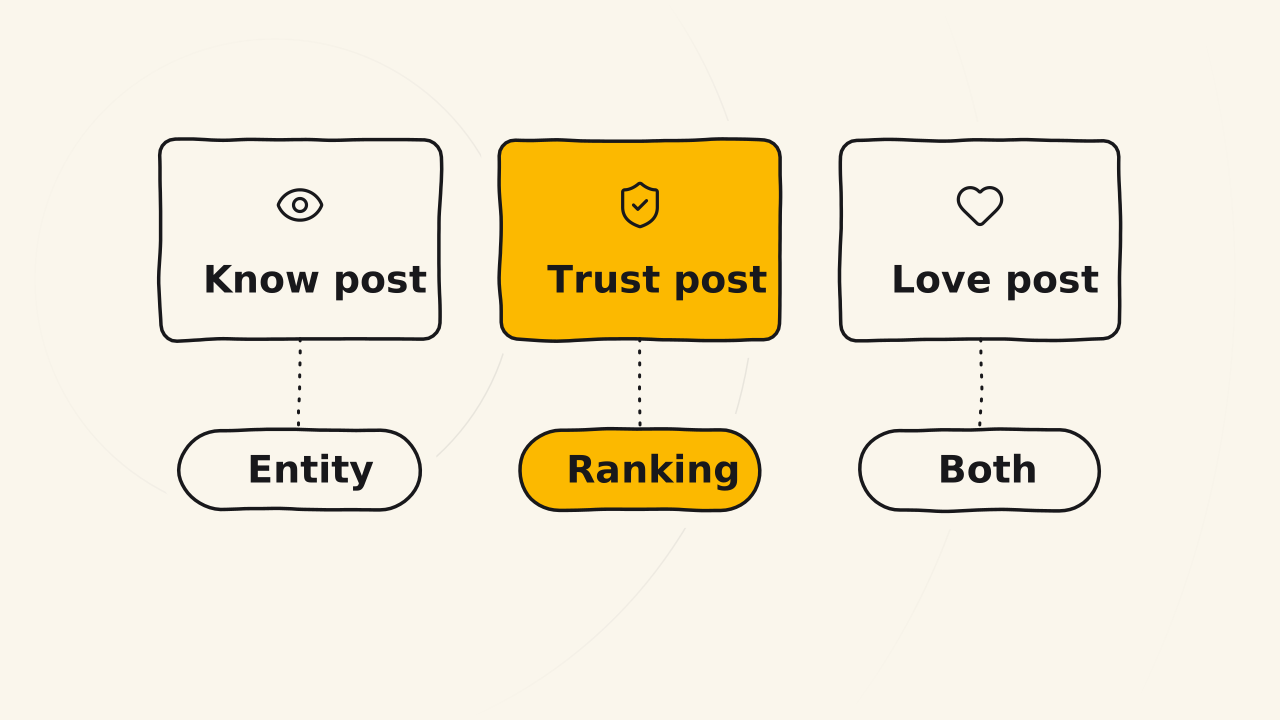
A ranking keyword is most useful in 2 types of post in the Know - Trust - Love funnel, namely the Trust post and the Love post. A Know post does not need this kind of keyword, because on a Know post AI usually answers in your place.
Trust posts compete on ranking
The Trust post is a how-to post, so the Trust post puts the ranking keyword first. In every context, a how-to post centres on a ranking keyword.
With a Trust post, you compete with everyone in the market to guide newcomers and to guide your own group of customers. The ranking keyword helps your how-to post rank high in the search results when readers type the exact task they need to do.
Love posts mix both
A Love post uses both the entity keyword and the ranking keyword. When it can, a Love post should also add a ranking keyword.
A ranking keyword is strongest when the post is about a complete solution. That is one real highlight of the product that meets a big need and solves one specific pain. A Trust or Love post like that, with the exact phrase people search added, is a post that is both understood and found.
Those phrases can be found with free Google tools.
Use Google and Keyword Planner
You can find ranking keywords for free, even without a keyword tool of your own.2 There are 2 levels:
- Traditional Google search, the fastest way. You type the phrase into Google and look at the results: who ranks, and how they write their posts.
- Google Keyword Planner, when you need a deeper look at how often each phrase is searched.
After a post is published, Google Search Console also shows you the phrases that bring readers to the post even though you did not aim for them. Those phrases are called abandoned keywords. A phrase like that can grow into a full post of its own to win it better.
Related pages
- Not explaining brand names and big topics: see Entity keyword.
- Not a guide to checking that a topic has searchers: see Google Trends.