
An entity keyword is a keyword that carries your brand name or names the big topics you want to own. This kind of keyword tells the algorithm who you are and what your website is about. When you start to compete on the Internet, this is the first kind of keyword you pick.
What is an entity keyword?
Entity keywords help you position your content, which means every post on your website circles a few clear topics instead of scattering everywhere. A “big” topic here is big compared with a single post. One big topic holds many posts, and each post is one angle on it.
An entity keyword differs from the keywords you usually look up because it is not tied to a fixed string of words. A normal keyword is a string of words you have to repeat exactly. An entity keyword is the name of something real, such as a brand, a product or a topic that many people already know and search for.
Next to the entity keyword sits the ranking keyword, the long keyword of traditional search. The two work together, but the entity keyword comes first, because buying and selling today depends more on entity keywords.
To use entity keywords well, first learn to tell the 2 kinds apart.
2 Kinds to tell apart
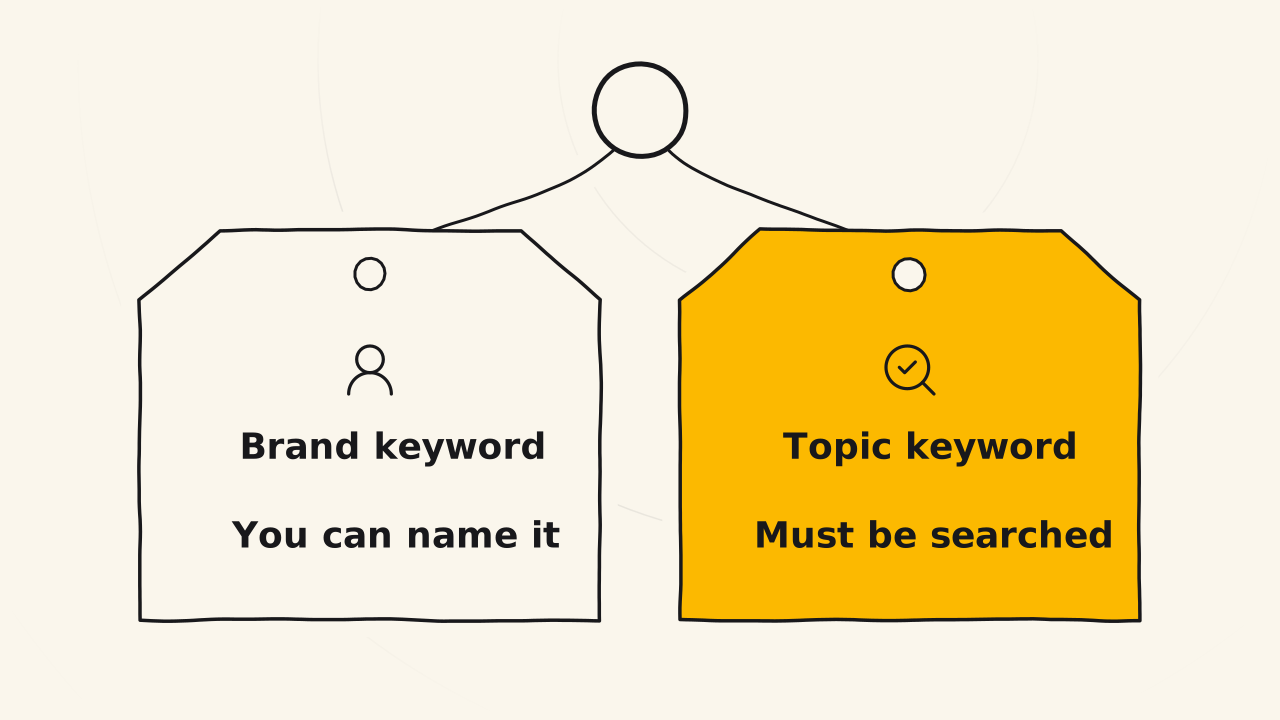
Entity keywords come in 2 kinds. The first says who you are, and the second says what you talk about:
- Brand keywords, which carry your own name.
- Verified topic keywords, which name the big topics.
1. Brand keywords
Brand keywords are the words tied to your brand:
- Your name.
- Your brand name.
- Your product names.
- The brand’s mission.
- The person behind the brand.
These words link the pages of your website into a knowledge base for the algorithm. With that knowledge base, the algorithm knows who you are and what the website is about. The highlights of your brand and product, meaning what makes you different from others, belong here too.
Brand keywords are the only kind that you get to invent. A new name nobody searches yet is still a valid entity keyword, because that name serves to build the brand, not to attract people who are already searching.
2. Verified topics
A topic keyword is the name of a big topic that your content circles. The topic must be called by its right name, which means the name people actually use when they search.
“Verified” means the topic is real and people care about it. You check this with Google Trends. A topic that many people search has a certain level of interest, and that makes it worth taking.
You can only take a topic keyword when the topic already exists. This is the difference between a topic keyword and a brand keyword. You cannot create search demand for a topic yourself.
These two kinds of keywords matter more than before because the way people search has changed.
Searchers think in ideas
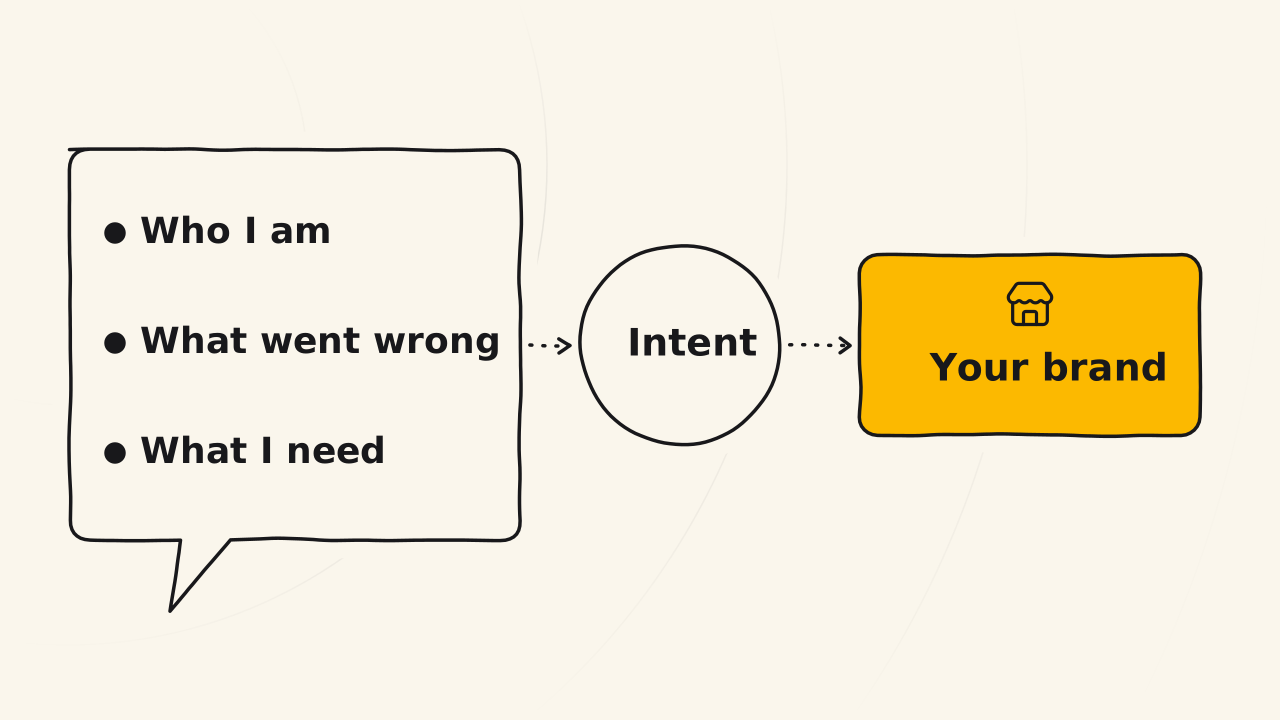
Today, people search on Google, in AI search mode and in chatbots like ChatGPT. They no longer type a short keyword or a fixed long keyword. They give a concrete situation, namely who they are, what problem they face and what they need.
That situation creates a search idea. From that idea, search engines and AI use entity keywords to find the right brand. You show up when your entity keyword matches the searcher’s idea.
So to make content in the age of AI, you need to know 3 things about your reader:
- What they search for.
- The intent behind that search.
- Their use case, meaning what they plan to do with the answer.
From these 3 things, you work out what content to write. Entity keywords raise your presence, above all your coverage on AI tools.
To be found this way, you have to pick the right words from the start.
A wrong pick nobody searches
The clearest sign of a wrong entity keyword is that nobody searches the word. The word has not been verified, because you picked it on a hunch, not because you saw others use it.
Two habits often lead to words nobody searches:
- Using regional words, names that only people where you live know.
- Making up a word from your own thinking, then treating it as an existing topic.
Both are wrong only when the word is not a brand keyword. If you invent a word to be your brand, it is still right. If you pick a word to attract searchers and take a topic, it has to be proven to exist. Once you have the right word, the job left is to put it in the right kind of post.
Know posts need presence
Each kind of post in the Know - Trust - Love funnel aims at a different kind of keyword, as the table below shows.
| Post type | Main keyword | Why |
|---|---|---|
| Know post | Entity keyword | AI often answers for you, so what you need is presence |
| Trust post | Ranking keyword | A how-to post competes with everyone on the same keyword |
| Love post | A mix of both | A full solution to one pain needs both presence and rank |
For a Know post, you do not need to care about ranking keywords. For questions people need to know, AI often answers in your place. What you need is for AI to mention you, so a Know post focuses on entity keywords.
The Truth vault and the Content funnel in stage 2 have the same goal, which is to cover every entity you want to own. The better AI search gets, the fuller your entity keywords must be. Each group in the Truth vault and each Content funnel is one part of that coverage.
Related pages
- Not about the long keywords of traditional search: see Ranking keyword.
- Not a guide to building a vault for your product: see Product Truth vault.