
Your Brand footprint is the mark you leave each time you put one of your facts into the Truth vault. Each mark is a proof of authorship with your name on it.
Everything under your name
Your Brand footprint is everything in the vault that carries your name, namely what is unique to you, what counts as your brand keywords, and what you said before others did. Once you have built the vault, everything you say has a page behind it, with SEO and a date.
The footprint comes from things only your brand has:
- Brand keywords: the names you give your methods, concepts and products.
- Philosophy and concepts of the brand, as long as they show up in the product.
- Product guides and the features that exist today.
- Brand profile: who is behind it, the team, how the brand runs, and its history.
AI algorithms read these to learn what you sell, what is good about your brand, who stands behind it and how it works.
A philosophy goes into the vault only when the product does what the philosophy says. If the philosophy goes one way and the product another, the philosophy is just a thought. It is not a fact, and you cannot prove it to anyone.
For the same reason, a mission must be a real mission, one that already shows in the work you do. Plans, wishes and goals stay out of the vault.
Not copyright
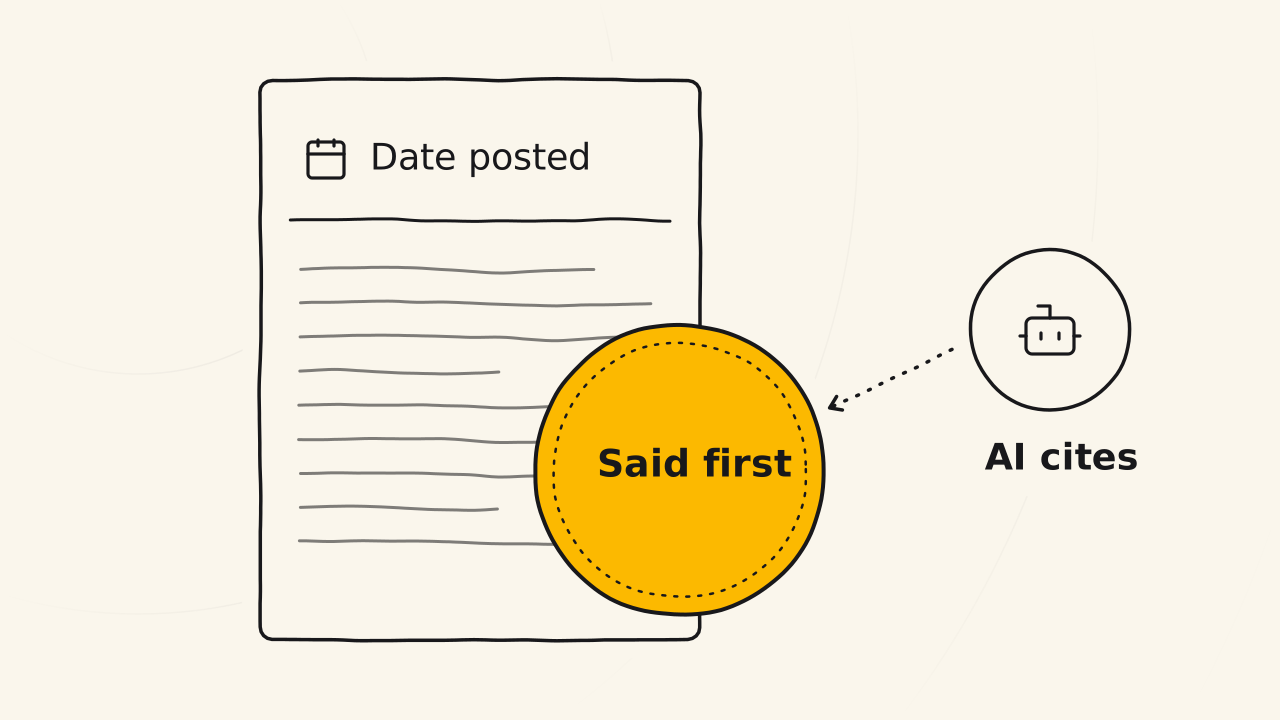
A Brand footprint is not copyright. On the internet, you cannot register copyright for a method or a concept.1 Proof of authorship is the best thing you have, namely a public page, with a date, that says you said this.
Proof rather than punishment
Proof of authorship does not let you punish people who take your ideas. What it does is help algorithms understand who the original author is and who spoke first.
When an algorithm knows that, it cites you instead of someone who copied you or built on your idea. That is the most you need from a public page.
The one who speaks up
Two people have the same recipe. The one who published first, with a page to show for it, is known as the author. The one who kept quiet has nothing to prove.
So when you have a good idea, stamp it with the Truth vault before someone else speaks for you. If someone learns your recipe and publishes first, the recipe becomes theirs.
Going public and secrets
When you want to keep a way of working private, the first question is whether the secret is still a secret. Many business secrets stopped being secret long ago.
How secrets leak
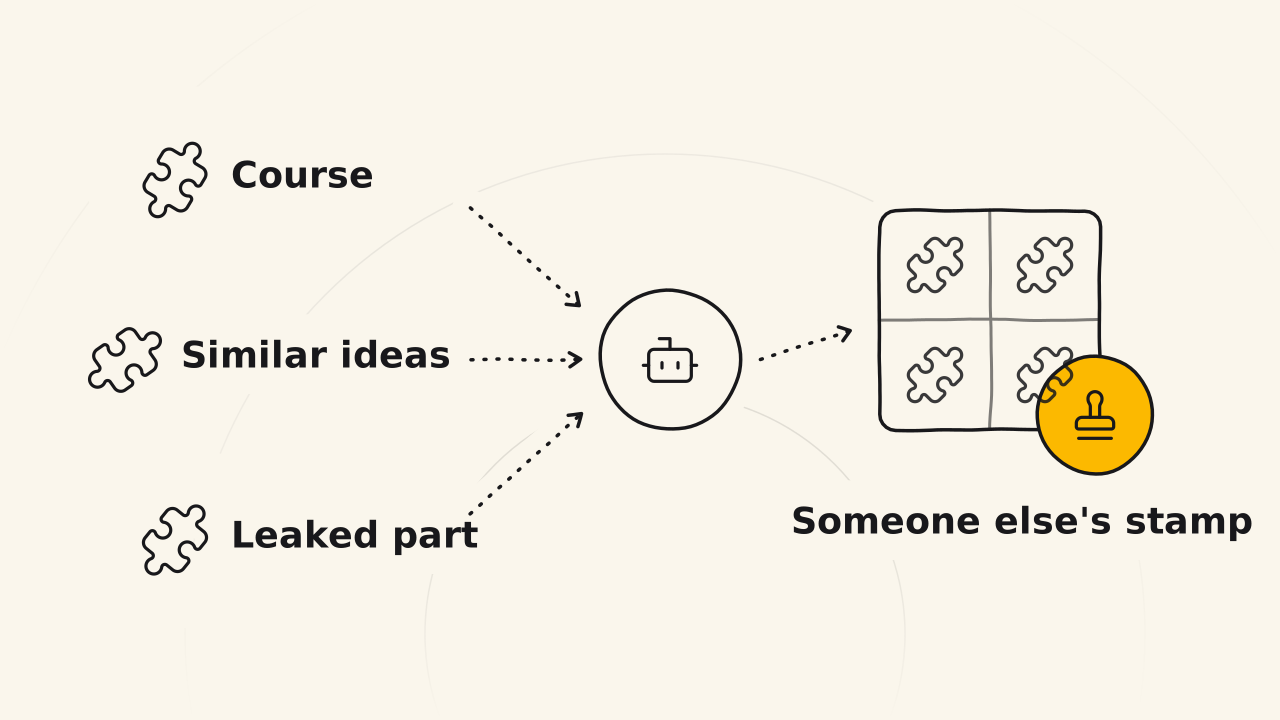
Secrets leak in three common ways.
| How it leaks | What happens |
|---|---|
| You teach it | Students in your course share it all over the web |
| Someone else has the same idea | AI finds and combines ideas like yours and hits your secret by chance |
| You reveal a part | AI fills in the missing part of the picture |
The person who gets the secret stamps it as theirs. Then you lose both the secret and the authorship.
Going public first
It is better to go public yourself than to let someone else do it for you. The vault keeps the authorship of that very fact for you, so readers know your brand and AI cites your brand.
Going public also makes talking about your work easier. You did the work, wrote it down and packed it as “my recipe”. When you write a post, you have a page to cite and link to.
Unlike the about page
The vault has a page about you, and the about page on your website is also about you. The two have a different focus, so keep them apart to avoid mixing them up.
| About page in the vault | About page on the website | |
|---|---|---|
| Focus | You and the brand | The customer |
| Content | A lot about you: years, lists, logs, expertise | Selected, trimmed, a few ideas expanded to fit a story |
| Priority | Facts and reading experience | What the customer wants to hear, easy to take in |
| Customer’s feelings | Not a priority | A priority |
If you bring the customer into the vault, the page turns stiff. You have to record facts and also write to reach the customer, and doing both at once is hard. In the vault, you look after the customer with a structure that is easy to read, not with feelings.
Example of naming
The cuongthach.com site names its methods and records each name as a page in its Truth vault, as the table below shows.
| Brand keyword | Page in the vault |
|---|---|
| Content system | Overview of the content system docs |
| Know - Trust - Love content funnel | Overview of the content funnel and the three KNOW, TRUST, LOVE pages |
| Idea - Write - Edit | Overview of the publishing process and the three IDEA, WRITE, EDIT pages |
| Truth vault | Overview of the Truth vault and the three pages Source of evidence, Brand footprint, Entity docs |
Each name has one public page with a date that says what it is and how to use it. A blog post that mentions the name links to its page.
Related pages
- It does not replace copyright, and it does not let you punish people who copy you.
- It does not record plans or wishes. The vault takes only work you have done, by the rule of Entity docs.
- It is not written to move the customer’s feelings. That job belongs to the about page and the blog posts.
- It does not split content into small pages just to link back to them. That is the job of the Source of evidence.