
The Trust posts sit in the middle of the funnel, after the Know layer and before the Love layer.
How does the Trust layer build trust?
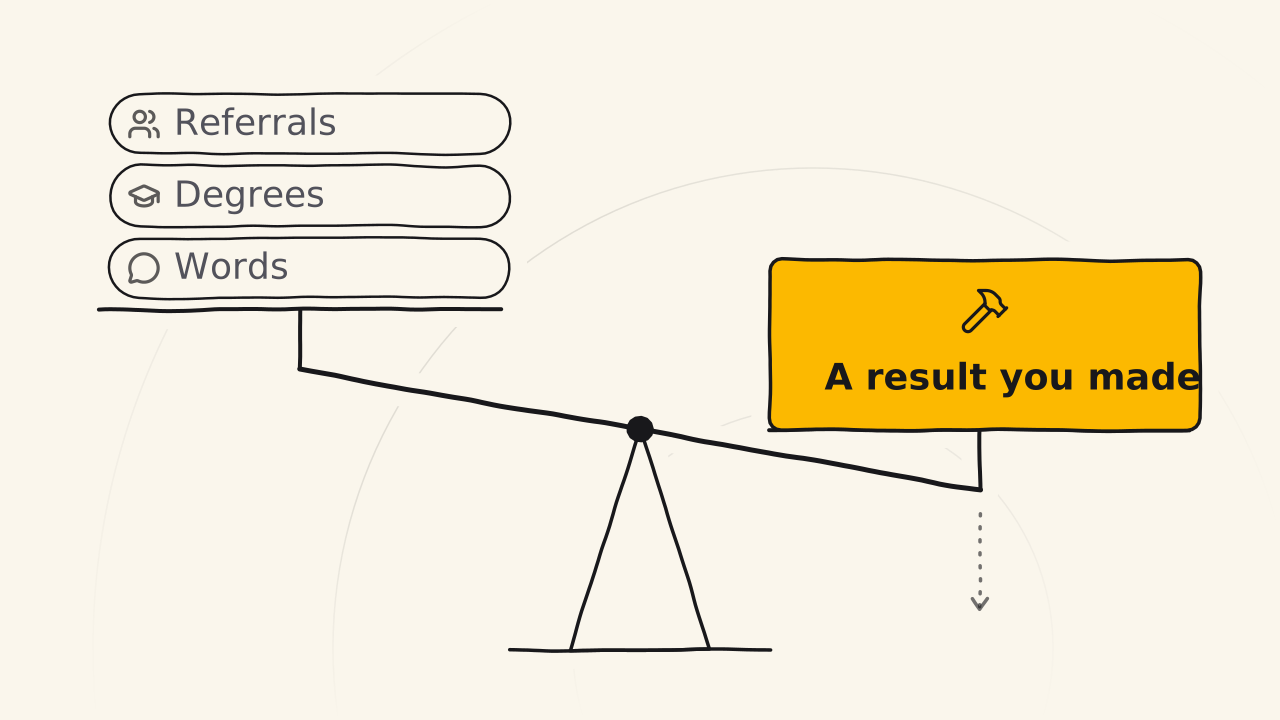
The Trust layer builds trust with action, not words. Readers trust you when they get a result themselves.
With a result the reader gets on their own
A Trust post guides the reader to solve their problem right now, ease their pain right now, and finish one task. A plan that takes one, two or three years cannot build trust at this point. You need trust that comes almost at once, so the reader moves on to the Love post.
Words, degrees and introductions can’t do that. A customer who comes from a referral already trusts you a little, but not fully. They trust you fully only when they follow your guide and it works.
With short guides, from easy to hard
Readers like short guides. Your skill shows through those guides:
- A video or a pair of screenshots proves you do the work for real.
- The way you speak and the way you understand customers.
- Step-by-step guides, with detail, that lead the reader in your direction.
Through them, customers feel how well you understand them. The posts in this layer go from easy to hard. Jumping straight into a guide that is too advanced is the over-advanced guide mistake. The reader can’t finish it, and trust does not form.
How many posts does the Trust layer need?
The Trust layer has the same number of posts as the Know layer or fewer, never more. A funnel has at least three or four Trust posts.
More Trust posts than Know posts means the layer above is missing. The funnel has too few points of contact with customers. When the numbers are off like this, add Know posts.
The Trust layer sits in the middle of the funnel, and readers don’t always arrive in order:
| Reader comes from | Goes next to |
|---|---|
| A Know post | A Trust post on the same topic |
| Groups, search engines | Straight to a Trust post, gets a result alone, then moves to the Love post |
A Trust post is the kind of post to share in communities, because it gives a usable value right away. At the end of each Trust post, invite the reader to the funnel’s Love post. Use a different invitation and a different angle each time, so the path doesn’t feel like a template.
How do you know a customer trusts you?
Customers trust you when they get results, and they leave traces everywhere you appear:
- They message you directly on social media or in the community.
- They share your post.
- They stay on the page for a long time, follow every detail, and save the page.
- They leave a comment.
The clearest sign is that the reader clicks through to the Love post and reads it. Google Analytics shows this path: they land on a Trust post, then click to a Love post. According to Cuong, when a reader has clicked through to the Love post, their trust is already above 50 on a scale of 100.
What happens to the funnel when the Trust layer is thin?
Without the Trust layer, the funnel is not complete. You reach a customer and send them straight to the Love post, and the Love post leads to the sales page. You rush the customer and cut short a stretch they need to walk. They don’t trust you yet, but they already see an offer to buy.
The customer may still buy, but the sale does not last:
- They buy on emotion, without solid trust.
- After a night, or after hearing someone else’s opinion, they think again and doubt.
- They ask for a refund, change their mind, or write “I don’t understand, I’m not satisfied.”
Example of a referred customer moving through the Trust layer
Cuong uses this case to explain why a referral is not enough:
| When | What the customer does | Level of trust |
|---|---|---|
| Referred to you | Hears others talk about you | Trusts you a little, not fully |
| Reads a Trust post and follows it | Finishes the task and holds a result | Trusts you a lot |
| Clicks to the Love post | Sees the bigger picture | Has the drive to keep going, trust above 50 |
A referral opens the door. The result the customer gets on their own builds the trust.
What does the Trust layer not do?
- It does not explain why. Naming the problem is the job of the KNOW layer.
- It does not sell. The Trust layer leads to the Love post, not straight to the product.
- It does not promise a long road. Each post gives a result the reader can get right away.