
The outline is the script of your post, and you lock it before you write a single word. A locked outline usually has six to eight main ideas, ready for the Write step. Building the outline is the Idea step of the Idea - Write - Edit process.
The steps below are for you when you have a topic you understand deeply and want to share. If the topic is something you only know a little about, the outline will not come, so pick another topic first. If you already have an outline and want to write now, write a first draft in one go from the outline.
What to prepare
- A topic, in one line or just a title.
- Real knowledge of that topic. You know it and understand it deeply. You have run into it yourself, and you do not just know a little about it.
- A way to pour out ideas: pen and paper, a text editor, or a recording app on your phone.
- The post type. You know whether this is a Know post, a Trust post or a Love post in the funnel, because the question set and the shape of the outline follow the post type.
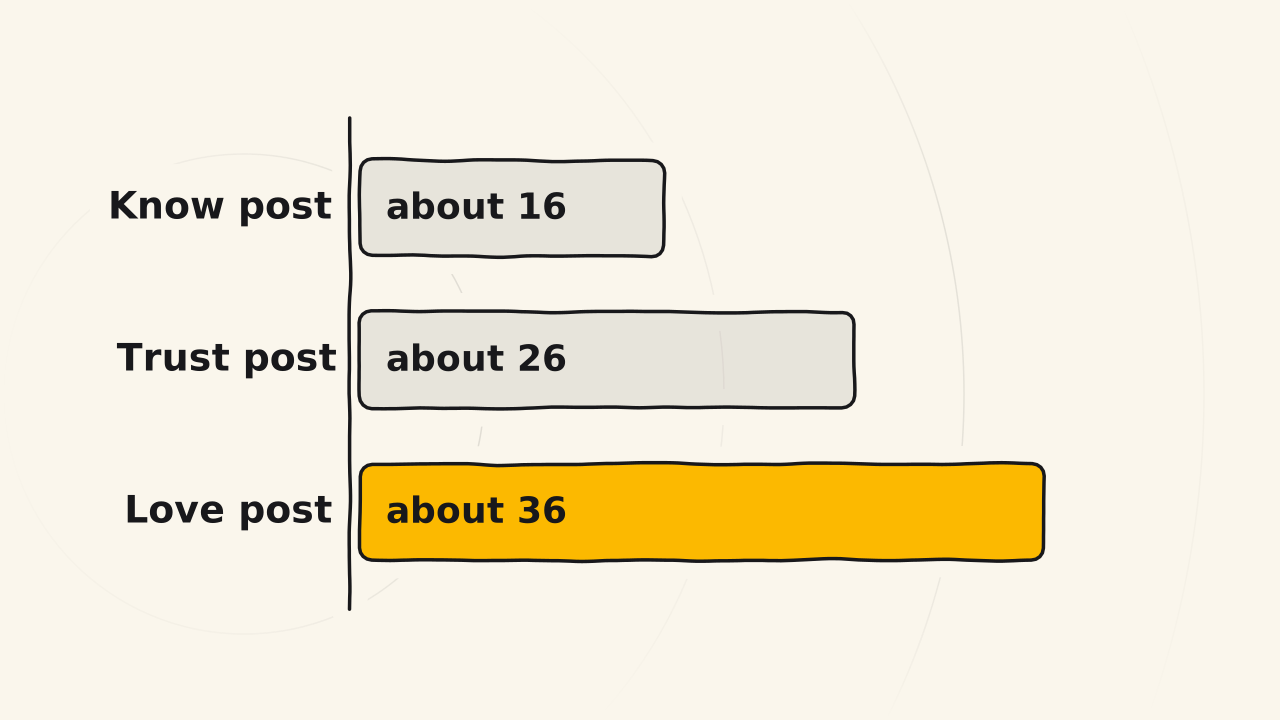
If you record, prepare a set of guiding questions for the post type first. This set is called the idea-starter structure. It guides what you will talk about, while the sharp ideas only show up after the recording is done. Give the one-line topic and the post type to AI with the prompt for a question set. The numbers below are not a standard. They are only the set in use for the cuongthach.com blog, with a limit for each post type.
| Post type | Current set | The question set focuses on |
|---|---|---|
| Know post | About 16 | Explaining so customers understand |
| Trust post | About 26 | Each step of the work |
| Love post | About 36 | Strategy, process and meaning |
From topic to outline
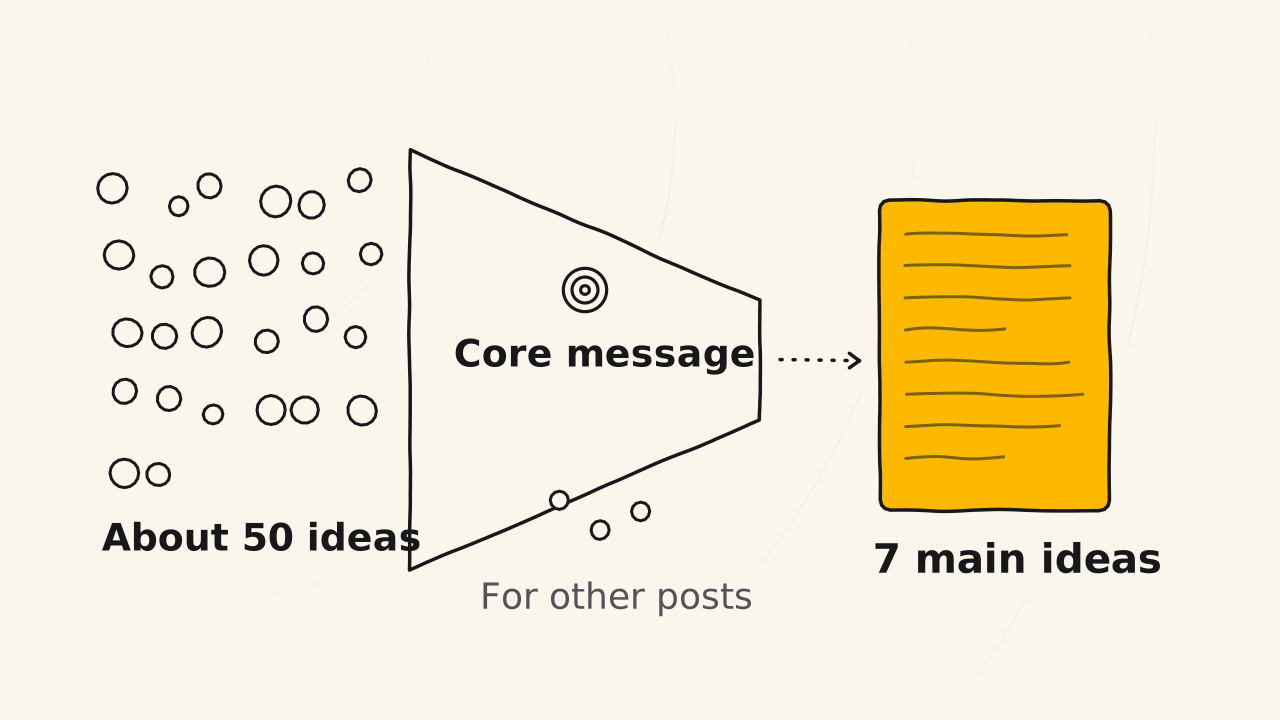
The three steps below go from one line to a locked outline, namely pouring out every idea, filtering by the core message, then locking.
Pour out every idea with three starter questions
Go offline and answer from what you already know, with no looking anything up. If you have a question set, read each question out loud and answer it. With no AI or internet, you can still start with three starter questions, also called the three root questions:
- What is it? Name it and define it in your own words.
- How does it work? How it runs, how you do it.
- Why does it matter? To you, and to your customers.
Once you have answered, do not stop, because each answer pulls in new ideas, memories and stories. This step is usually recorded. A personal story that relates to an idea goes straight into the recording. That story will fit into the post, so you do not need to record it separately.
While you pour out ideas, repeating yourself or stumbling is fine. You will see dozens of ideas, sometimes fifty, on paper or in the recording.
Filter the ideas by the core message
Put every idea in one place so you can see them all. AI does this very fast. Give it the transcript and ask it to group the ideas and split them into separate ones. Write the core message from the four parts of the context, squeezed into one line:
- Who your customer is.
- What their pain is.
- What your solution is.
- What result they get.
Go through each idea and ask whether it serves the core message. Keep the ones that do, save the rest for other posts, and drop the extra ideas and the ones that miss the topic. Each idea you keep comes with a short paragraph of about 300 words, which is easier to picture than a bullet point. In an example from the cuongthach.com blog, about 50 ideas poured out, and filtering by the message left 7.
Go deeper, put the ideas in order and lock the outline
If your first round was shallow, do an extra recording, one more round about only the ideas you kept, so they come out clearer and deeper, with no repeats. If your first round already answered every question in the set, you do not need it. A second round then adds only about 20%, which is not worth the effort.
Put the ideas in the order the reader needs to go through them. Give each main idea a short, plain title with no fancy words, no slang and no metaphors, because both readers and AI scan these titles.
AI can squeeze a long idea into one sentence, and then you fix it so it says what you mean. Adjust the post title to match the main ideas. Do not write an opening here, because an outline has no opening. You will have an outline made of the post title and the main ideas, usually six to eight.
When you record, you talk fast, so you miss the quiet moments for deep thinking. You make up for it before you lock. You switch from the talking role to the listening role and read your own transcript in the quiet. Check whether the topic holds up, whether you went deep enough, which idea is missing, and type it in right then. Do not lock it right away.
Signs it is ready to lock
Read the main idea titles from top to bottom, as a stranger seeing the post for the first time.
- Can you see the message? If not, rewrite the core message and filter the ideas again.
- Do the ideas flow? If there is a jump, change the order or add the missing idea.
- Is any idea exactly like someone else’s post? If so, put your own story and experience into it.
- Is there a title you have to read twice to understand? If so, rewrite it plainly, with no metaphors or fancy words.
- Is there an idea you still only half understand? Mark it. You fill that gap in the handover to the Write step, before you go offline.
- Do you like it when you read it back? If you do, lock the outline. This is where the Idea step stops.
When the outline is off
An outline that is off usually signals that the Idea step lacks structure or knowledge of the topic. Note each weak spot as it shows up and fill it, rather than forcing it through.
Recording runs too long
You jumped into recording with no structure, so you repeated yourself, said the same idea twice and drifted off the post. What you said is not lost, because you keep it for other posts. But this post can use only a small part of it. That is lost productivity, not lost words.
Next time, prepare a set of guiding questions first. When what you say stays close to the post, 10,000 words become 5,000, and with a good structure, 7,000.
Going blank on a question
Going blank is normal. Note any question you cannot answer, or can answer only halfway, keep going with the others, then look it up and learn more to fill that blind spot yourself.
Stuck on the starter questions
You do not understand the topic deeply enough to share it yet. Drop this post, or learn more and come back.
The outline drags on
Time piling up in the Idea step shows you are getting stuck there, and you need to fix that stuck step.
Related pages
- It does not show how to pick the idea of the post: see The Idea step.
- It does not explain what a core message is: see Core message.
- It does not show how to record to a question set: see Record to questions.